
by Luke Hawkins
What causes people to act the way they do? Is there any way we can influence or redirect their behavior and thought processes? These are the questions that the field of psychology attempts to answer. Psychology is the study of mind and behavior, in both humans and non-humans (animals). However, how people attempted to answer these questions over the course of human history is incredibly varied. In some instances, a tremendous positive impact was discovered through rigorous scientific experimentation. Comparatively, incredibly dark experiments were conducted that left a negative impact on the participants and the world around them as a whole. The field of psychology has an extensively rich history, so let’s start at the beginning.

Aristotle and Plato depicted in The School of Athens – Credit: Raphael
The field of psychology has roots way back in ancient times with the famous thinkers Plato, Aristotle, and Socrates. Back in the 4th century, B.C.E. Plato represented the “nature” side of the debate, that although the mind and body are separate, human knowledge is innate from birth. On the other side of the debate, Aristotle held the “nurture” belief that knowledge comes from experience as the mind and body aren’t separate but connected. Also around this time was the great thinker Hippocrates who proposed the “four humors” (blood, phlegm, yellow bile, and black bile), in an attempt to explain why both mental and physical sickness occurs. Although these debates were held over 2000 years ago, we can still see the ramifications today! Many modern psychologists are still arguing for both sides of the “nature” vs. “nurture” debate, with many standing in the middle that both are of equal importance. (We threw out the “four humors” long ago). Despite this, a critical distinction must be made between these early explanations of the mind and behavior. These early thinkers were simply philosophers, NOT psychologists. Here’s why…
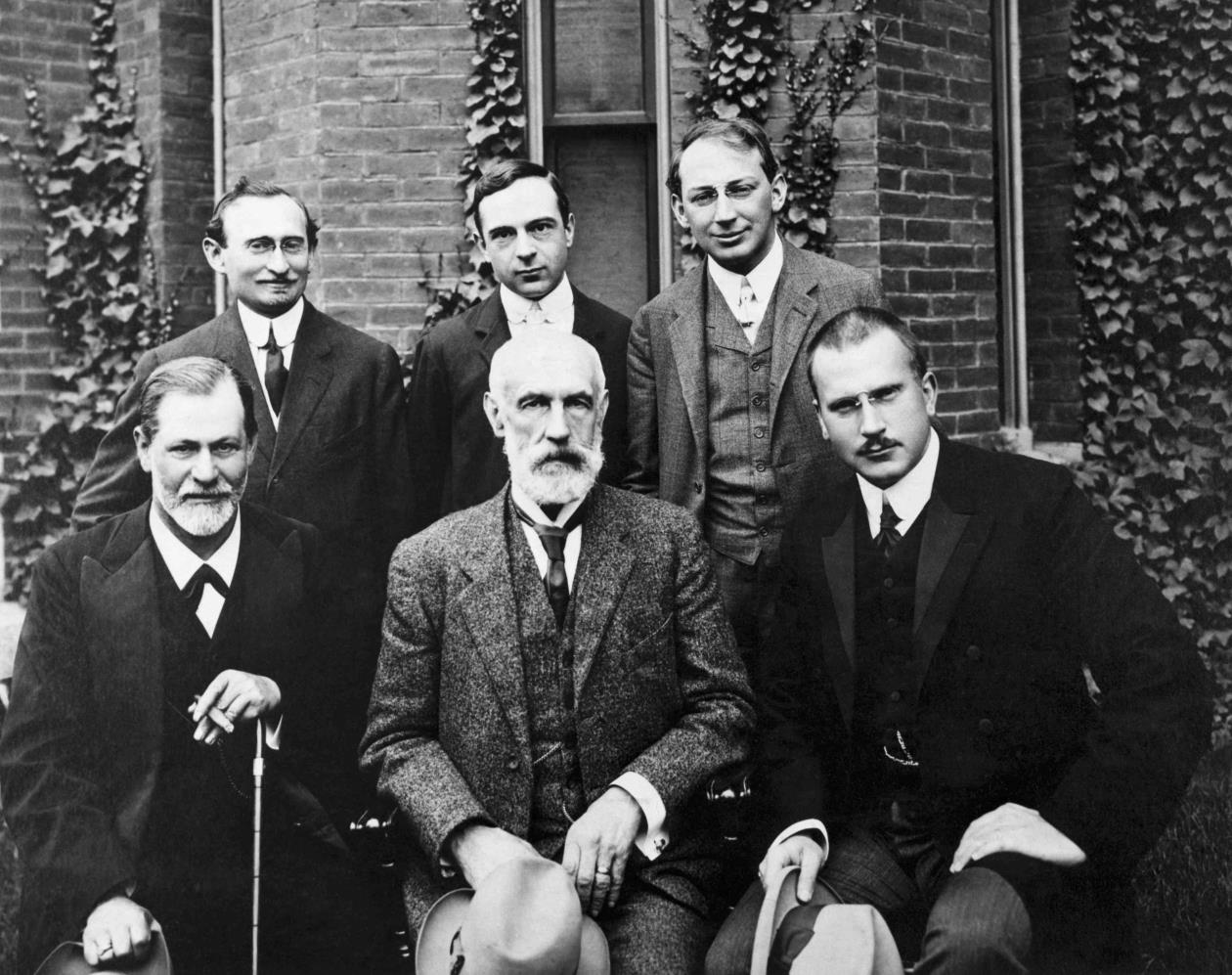
Sigmund Freud surrounded by other famed early psychologists – Credit: Bettmann Archive
In the late 19th century, a few critical individuals in the field of psychology emerged onto the scene. Sigmund Freud and Wilhelm Wundt are considered to be the fathers of modern psychology but for wildly different reasons. Let’s break down why. Wilhelm Wundt opened the first psychology lab in 1879 with the purpose of conducting rigorous scientific experiments to determine relationships between different things. In addition to his various experiments on reaction times, and perception, he was also the first to establish an academic journal for psychology research. What’s more, he was the first person to call himself a psychologist! Around the same time, Sigmund Freud emerged on the scene with some influential ideas that would forever shape many theories of psychology.
Freud believed that much of our behavior is actually driven by our unconscious mind (things we aren’t even aware of). Additionally, he believed that personality was a combination of three central factors, the Id (basic instincts and desires), the Ego (the rationale between the id and reality), and the Superego (moral compass and ideals). In practice, this theory would look like wanting to skip class (Id), knowing you shouldn’t (Superego), and deciding whether or not to skip (Ego). In addition to these contributions, Freud also had important contributions to the creation of talk therapy (sitting down and talking through things with a psychologist) and emphasized the importance of childhood experience on development. However, many critics of Freud claim he went too far with his ideas of childhood (particularly regarding parental relationships and physical attributes). Nevertheless, both Wundt and Freud left a significant impact on the field of psychology and were ultimately the first to lay the groundwork for what was to come.

B.F. Skinner surrounded by experimental birds – Credit: Highbrow
Thanks to the efforts made by Wundt and Freud, many started to validate the field of psychology as an academic science. In the mid-20th century, many new experimental psychologists would emerge with their own unique theories and experiences that would leave a lasting impact. For example, John B. Watson wanted to shift the focus of the field into only what could be observed as opposed to the earlier theories of Freud who believed that behavior was mainly unconscious. To further this goal set by Watson, B.F. Skinner studied how rewards and punishments shaped behavior. This process was first noticed by Ivan Pavlov when he realized that dogs salivated when he rang a bell as they were expecting food, known as classical conditioning. Skinner built upon this by studying the process of operant conditioning, intentionally focusing on increasing behavior through rewards and decreasing behavior by punishments. A clear example of this comes in the form of schoolwork. If you get a good grade on a test and then get praised for it, you are more likely to study harder to achieve a good grade the next time. Although these psychologists built upon the work of their predecessors to expand our knowledge of behavior, many other psychologists started conducting unethical and infamous experiments.

Stanford Prison Experiment – Credit: BBC News
Because the field of psychology was just emerging, many safeguards were not yet developed to protect people’s rights or their well-being. Unfortunately, this resulted in many harmful studies. The “Stanford Prison Experiment” involved college students being randomly assigned as either a prisoner or a guard in a fake prison and told them to play their role. This quickly led to the guards abusing their prisoners, forcing the study to end early due to immense physical and psychological harm. Another unethical experiment that took place was actually by John B. Watson himself, and it’s known as the “Little Albert Experiment.” It took the principle of classical conditioning discovered by Pavlov and applied it to the concept of fear in humans. Watson and his colleague conditioned the infant Albert to be afraid of a white rat by banging a loud noise when he was in the presence of the rat, which later caused him to fear all white fluffy things. Other experiments such as the “Milgram Experiment” involved shocking participants and secret government projects such as “MKUltra” used psychological drugs such as LSD on American citizens without their consent. These harmful and unethical experiments are a dark stain on the history of the field of psychology and have resulted in a rigorous review board process that current researchers must abide by to make sure these are never repeated. However, not all the groundbreaking psychological experiments were harmful as a large majority of psychologists actually created a positive impact that is still felt today.
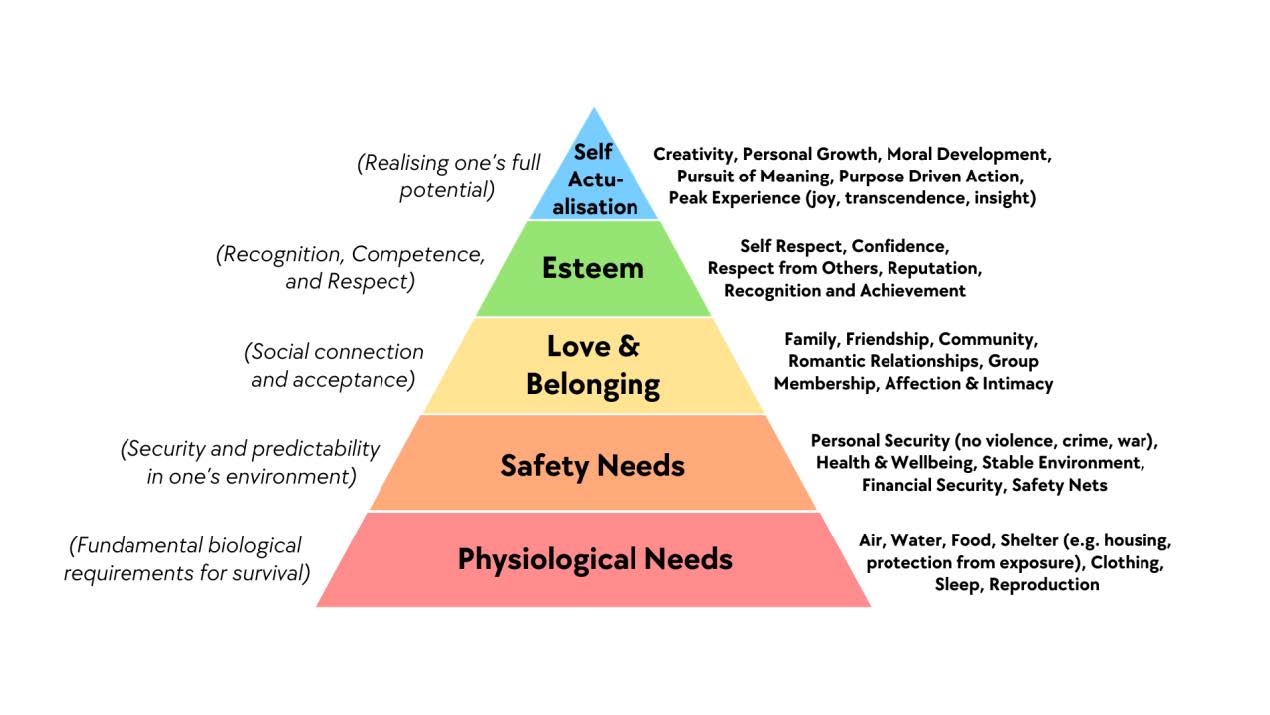
Maslow’s famed hierarchy of needs
Various modern theories of psychology have developed such as the Humanistic perspective developed by Abraham Maslow which aims to helping people reach their full potential by focusing first on their basic needs (food, water, security, support, etc.) to help them become their best selves. Additionally, psychologist Carl Rogers took talk therapy to a new level by developing client-centered therapy which emphasized the action the client wanted to take for their own life instead of being told by the therapist what to do. Other modern psychologists have also focused their energy on increasing empathy, positive thinking, and CBT (cognitive-behavioral therapy) to reduce anxiety, depression, and improve decision-making and cognitive ability within people. Because of the great advances that have been made in recent years due to an ethical, rigorous scientific process, we have developed a greater understanding of how the mind influences behavior both in positive and negative ways.
However, we still have a lot more left to learn as the field of psychology is ever-expanding and becoming more high-tech and involved in multiple different fields of science. New technologies such as fMRI (functional magnetic resonance imaging) allow us to take images of the brain and can help us to better understand the biology of our bodies in the field of neuroscience. The invention of AI (artificial intelligence) also is being used to help psychologists predict behavior and improve therapeutic interventions made by psychologists. Virtual reality therapy and mental health apps are also new immerging technologies to help people get over their fears via exposure therapy and help people stay accountable with the help of their friends and families. All of this to say, the field of psychology is expanding beyond the surface of talking about feelings as it aims to genuinely improve the lives of people.
As the science of psychology grows, different careers also emerge as psychology becomes more integrated into the culture. For example, psychologists can also work in hospitals as clinicians or psychiatrists, which are medically trained doctors allowed to prescribe medication to sick people. Psychologists can also work in the field of law or crime as forensic psychologists who analyze body language, provide law enforcement evidence at the scene of crimes, or appear in court to help bring people justice. Industrial-organizational psychologists play a major role in determining how best to advertise products and how better to improve workplaces in business and marketing. Athletes and large sports organizations also utilize specialized sports psychologists to help athletes perform under pressure to maintain focus and confidence to win games. Schools also hire psychologists and career counselors to help students determine what direction they want to take by helping students with their own mental health challenges. Effectively every field of work connects to psychology in some way whether you recognize it or not!
The history of the science of psychology spans thousands of years from great philosophers to modern scientists. Although many mistakes were made along the way, psychologists have learned from those experiments to improve our understanding of the mind and behavior. In the modern era, psychology is integrated into practically every field and serves as a reminder of how in understanding ourselves we can better understand others. If you could design an experiment, what would you choose to study and what other fields would benefit?