
By Braden Carne
You might have heard the phrase “Math is the language of the universe” being thrown around by scientists and podcasters alike, but there is an important caveat to this: we don’t speak math. Yes, numbers and symbols do a great job representing the natural world around us, but we need something more to turn these into something actually meaningful.
We need a dictionary.
Fortunately, some super smart people centuries ago “invented” modern physics! Ancient peoples figured out how to use stars to navigate, and many philosophers had their own ideas about how the world worked, but it took (in my opinion) the most brilliant mind that ever lived to create the modern physics that we know today: Isaac Newton. After Newton invented calculus to prove his theories, physics achievements have exploded in the past couple of centuries. With physics, it took only 60 years for humans to go from building the first airplanes to putting a man on the moon. Every time that we thought there was no more to be learned, another brilliant mind emerged to prove everyone wrong. Fields like quantum physics emerged from exactly this situation. Ever since Newton, physics has become an extremely rewarding field to be a part of, but it comes with a lot of challenges, especially for those wishing to pursue a career in it in this modern age.
Lucky for all you readers, this is exactly my situation!
The Author’s Experience.
A bit of background on myself before we dive into the woes joys of becoming learned in physics, hopefully this brief rundown of my journey so far can be helpful to those that were/are in my same position.
I am currently a third-year undergraduate student at the University of Iowa, studying Physics, Astronomy, and Math with a minor in Anthropology. I am a bit of an over-achiever, which helps a lot in this field, but you would be shocked to hear that physics was a last second decision coming out of high school.
As every kid does, the answer to the “what do you want to be when you grow up?” question changed frequently throughout the years, and I thought I had finally settled on healthcare during high school. But my junior and senior years, I had some incredible and passionate teachers and mentors that exposed me to how amazing physics was. Since then, I have not strayed.
Once I got into college, the realm of “just physics” became much too broad of a topic – I needed to find the niche that I could spend the rest of my life crouched inside. The introductory physics classes helped immensely, and through my first couple astronomy classes I discovered my love of the Sun and stars – specifically how they work. Once I had narrowed down the subject, the next step was to determine if I liked doing research, which fortunately I did (and still do). As of writing this, I work with Dr. Jasper Halekas doing computational heliophysics.
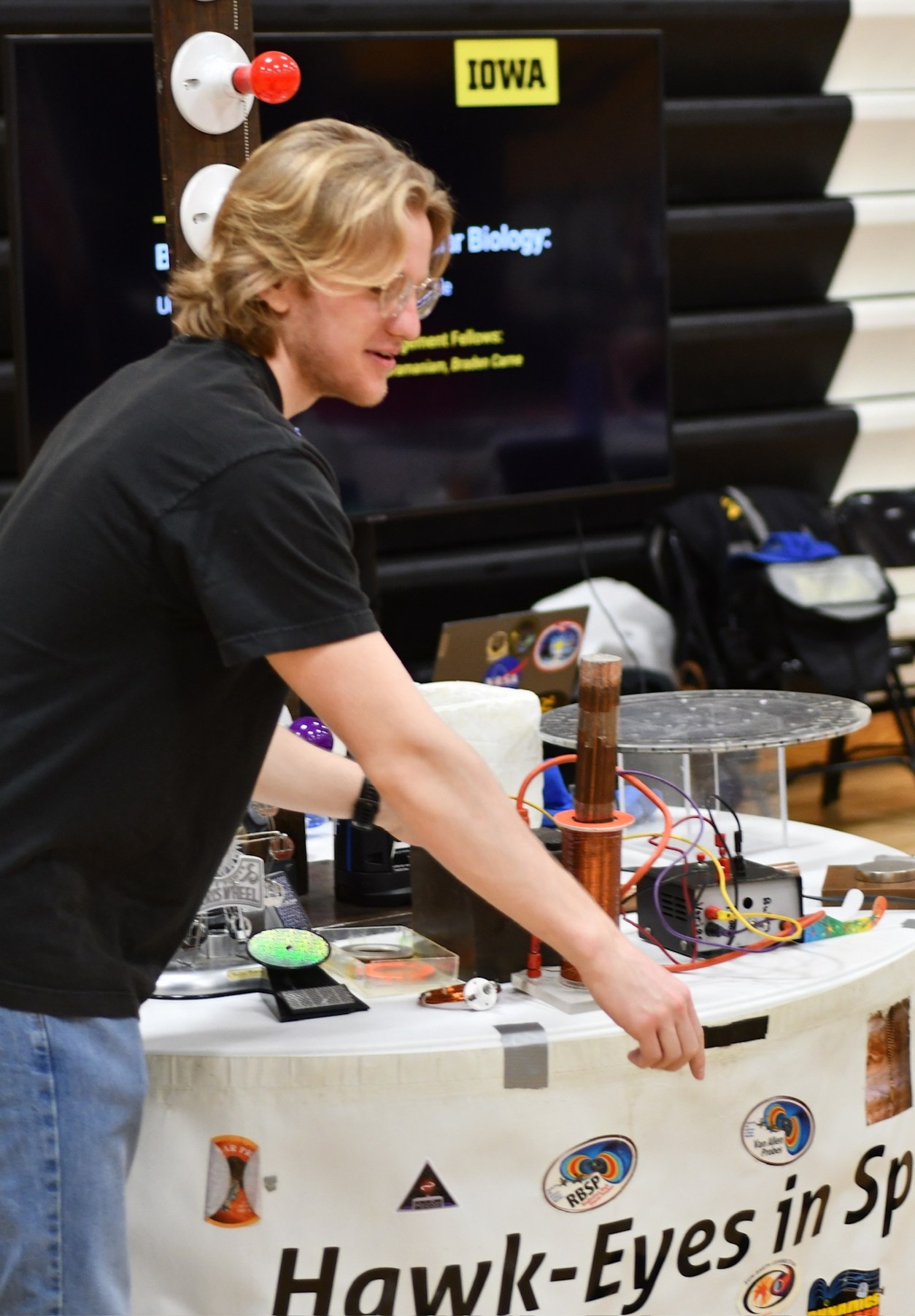
Is Research Right for You?
Now that you have heard my story, it is now my goal to walk you through all processes and tricks for successfully being educated in physics – from undergraduate to career.
To preface, there is no one track that guarantees you will “be successful” after graduating – there are many, many options ahead with a degree in physics, all of which I will get to later. However, if graduate school is your goal, the single most important thing to do during your time is obtain research experience. This has a couple of benefits:
- It’s fun! If you truly enjoy your field, the questions that are answered and created should foster your curiosity and strengthen your passion.
- Prepares you for the future. Undergraduate research if your first glimpse into the real world of research and is a (mostly) low stress gateway into this.
- THE resume builder. Graduate schools spend the most time checking out your experience to see if you would succeed working with their selection of advisors.
Getting involved can seem scary at first, but I can assure you that it is not that bad. Before reaching out to an advisor, there are a few important things you should do to make the best impression. Doing your homework is important, not only to make sure their interests align with yours, but also to make sure they can even support you. Many professors will have their CV (curriculum vitae) on their website, and there should be a list of current grants and fellowships the professor has. If you want to get paid, it is a good idea to ensure that the subject you want to research is being funded and there is incentive for them to let you pursue a project with them. On a simpler note, why would you show up to a job interview not knowing what the job is? The same applies here: know what research they are doing and show them that you are passionate and curious. Finally, before you even consider picking up a research position, ensure that your academics are in a decent spot. Research can be stressful at times, but your grades should always come first.
The last important thing about this that I will impress upon you: research is not the end-all-be-all. If you give it a shot and end up really despising it, then that is totally fine; in fact, it gives you a great idea about what you might want to do with your future now.
After Undergrad, What Now?
After graduating, things become a little more complicated, but your freedom grows exponentially. With a physics degree, there are countless high-paying jobs that will hire you straight out of school, but I will talk more about industry jobs later. In today’s world, most entry-level physics positions prefer that you have a master’s or PhD. The process to obtain each is very similar; however, a master’s degree is much more education-focused while a PhD is about the thesis. Figuring out which is right for you usually depends on your career path and the kind of physics you are interested in. For example, space physicists typically go straight into a PhD program, while those in the quantum computing world often obtain a master’s degree first. Another lesser-known option for those that have just graduated is a post-bachelor’s program that is designed for students to take more specialized classes or improve their GPA before applying to graduate school.
Once in graduate school, life takes a much different direction than it did in undergrad. Now, every school and every program work differently, but generally, your first couple years of a PhD program are spent doing a TA-ship, taking classes, and building a relationship within the department to scout out potential advisors. You then will start working under a professor/advisor to start your thesis. This is the “final project” of graduate school and is what certifies you as an expert in your field. You must compose an original project proposal, have it accepted, work however long it takes (typically 2-3 years) to complete the project, publish your work, and finally defend your findings to a board of academics.
While this might sound terrifying, and in the moment, it probably will be, there are so many resources and people helping you along the way to ensure that you are doing everything right. Your advisor is there for a reason and will teach you what you need to know and prepare you for that final thesis defense. After all, graduate school is still school – it is meant to teach you how to research in a professional environment. A master’s/PhD really does set you apart from the rest of the workforce and shows your dedication to the field.
Now, for those that want to do even more, there is one more “degree/experience” you can have after obtaining a PhD, and that is becoming a postdoctoral researcher. As the name suggests, this is something you undertake after going to graduate school and is entirely research focused. While in graduate school you are a student, still learning material and how to research, as post-doc you are paid research staff. Instead of working under an advisor and doing a project adjacent to what they are doing, you are coming up with your own research questions and publishing results. Post-doctoral programs are vital for those wanting to continue in the field of academia, as they help build your research portfolio and provide a lot of experience, which is crucial for being competitive in the job market for a professorship.
The First Field: Academia
One thing you learn very quickly about physics, and academia in general, is that it is basically one big pyramid scheme. Once you get too far down the rabbit hole, the only way to continue pursuing (and funding) your passion is by becoming a physics professor yourself. According to APS statistics, this is exactly what around 10-20% of PhD graduates do.
Working in academia in today’s world is all about research. A typical workload split, as per hiring contracts, is 40% research, 40% teaching, 20% service. There is a definite pressure by departments and funding sources to publish as many papers as possible. Many professors will take on multiple projects, all with different funding sources, and employ teams of post-docs, graduate students, and undergraduate students to help find results. While this may sound overwhelming, it allows for you to have broader interests than previous training allowed and to explore different fields of study.
One downside to academia is that the fuel for research is money, and that money has to come from somewhere. Professors spend a lot of time and effort putting together grant proposals to secure funds for every aspect of their project, including paying for graduate students’ lives and salaries. Fortunately, the institution that a professor works at pays their salary, provided they are teaching. With this, funding proposals fall through many more times than they are accepted, so securing funding for a project is a huge deal. Once secured, it is expected that you start assembling a team to work on the project and publish results to public journals during and after the funding period.
For those that enjoy research, teaching, and academic pressure, this is the obvious career choice and one that I personally plan on pursuing. There are other jobs inside academia that leave out some of these things. There are positions where you are only a research scientist and do not do any teaching, and there are also ways to only teach without needing to do research.
The main goals of those working in academia is to educate the next generation of researchers and work on the cutting edge of physics.
The Second Field: Industry
Industry is the other major path that physics graduates take, and it looks very different from academia. Instead of universities and research institutions, you are working for a company with specific goals and products in mind.
• Company-oriented work
• Working on one or two goals assigned to you (especially early on)
• Greater upward mobility within a company
• Research and papers often stay internal and are not publicly published
Industry jobs can range from aerospace and defense to data science, software engineering, finance, and renewable energy. Your physics background makes you an incredibly strong problem-solver, which is exactly what companies are looking for.
One major difference is that the pace and priorities are set by the company rather than your own curiosity. You may not always get to choose what you work on, but in exchange, you often receive higher starting salaries, more structured hours, and clearer career progression.
How Do You Make That Choice?
This is one of the hardest decisions you will make, and there is no universal answer. However, there are a few things that can help guide you:
- Network
- Talk to professionals in each area
- Try out different aspects of your chosen field
- If you don’t like your research, stop
- Do what makes you happy 🙂
Seriously—try things. The earlier you figure out what you don’t like, the closer you get to what you do.
The End
Physics is not an easy path, but it is one of the most rewarding ones out there. Whether you end up in academia, industry, or somewhere completely unexpected, the skills you gain and the way you learn to think will stay with you forever.
At the end of the day, math might be the language of the universe—but physics is how we learn to read it.