Category: Blog Posts

  • The Language of the Universe

    The Language of the Universe

    Loading

    By Braden Carne

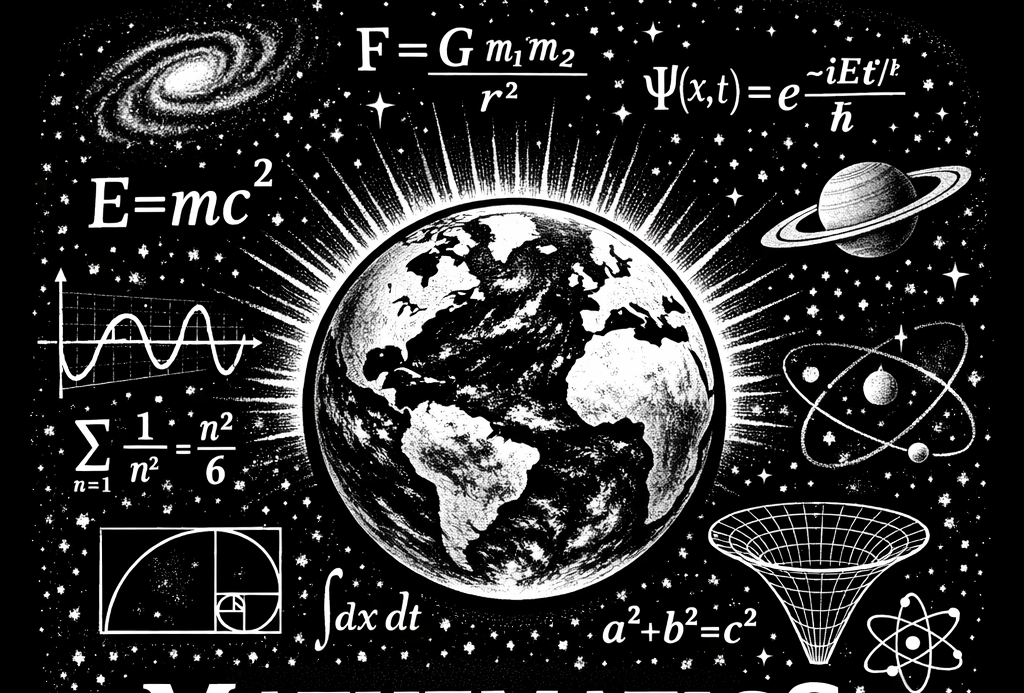
    You might have heard the phrase “Math is the language of the universe” being thrown around by scientists and podcasters alike, but there is an important caveat to this: we don’t speak math. Yes, numbers and symbols do a great job representing the natural world around us, but we need something more to turn these into something actually meaningful.

    We need a dictionary.

    Fortunately, some super smart people centuries ago “invented” modern physics! Ancient peoples figured out how to use stars to navigate, and many philosophers had their own ideas about how the world worked, but it took (in my opinion) the most brilliant mind that ever lived to create the modern physics that we know today: Isaac Newton. After Newton invented calculus to prove his theories, physics achievements have exploded in the past couple of centuries. With physics, it took only 60 years for humans to go from building the first airplanes to putting a man on the moon. Every time that we thought there was no more to be learned, another brilliant mind emerged to prove everyone wrong. Fields like quantum physics emerged from exactly this situation. Ever since Newton, physics has become an extremely rewarding field to be a part of, but it comes with a lot of challenges, especially for those wishing to pursue a career in it in this modern age.

    Lucky for all you readers, this is exactly my situation!

    The Author’s Experience.

    A bit of background on myself before we dive into the woes joys of becoming learned in physics, hopefully this brief rundown of my journey so far can be helpful to those that were/are in my same position.

    I am currently a third-year undergraduate student at the University of Iowa, studying Physics, Astronomy, and Math with a minor in Anthropology. I am a bit of an over-achiever, which helps a lot in this field, but you would be shocked to hear that physics was a last second decision coming out of high school.

    As every kid does, the answer to the “what do you want to be when you grow up?” question changed frequently throughout the years, and I thought I had finally settled on healthcare during high school. But my junior and senior years, I had some incredible and passionate teachers and mentors that exposed me to how amazing physics was. Since then, I have not strayed.

    Once I got into college, the realm of “just physics” became much too broad of a topic – I needed to find the niche that I could spend the rest of my life crouched inside. The introductory physics classes helped immensely, and through my first couple astronomy classes I discovered my love of the Sun and stars – specifically how they work. Once I had narrowed down the subject, the next step was to determine if I liked doing research, which fortunately I did (and still do). As of writing this, I work with Dr. Jasper Halekas doing computational heliophysics.
    Is Research Right for You?

    Now that you have heard my story, it is now my goal to walk you through all processes and tricks for successfully being educated in physics – from undergraduate to career.

    To preface, there is no one track that guarantees you will “be successful” after graduating – there are many, many options ahead with a degree in physics, all of which I will get to later. However, if graduate school is your goal, the single most important thing to do during your time is obtain research experience. This has a couple of benefits:

    1. It’s fun! If you truly enjoy your field, the questions that are answered and created should foster your curiosity and strengthen your passion.
    2. Prepares you for the future. Undergraduate research if your first glimpse into the real world of research and is a (mostly) low stress gateway into this.
    3. THE resume builder. Graduate schools spend the most time checking out your experience to see if you would succeed working with their selection of advisors.

    Getting involved can seem scary at first, but I can assure you that it is not that bad. Before reaching out to an advisor, there are a few important things you should do to make the best impression. Doing your homework is important, not only to make sure their interests align with yours, but also to make sure they can even support you. Many professors will have their CV (curriculum vitae) on their website, and there should be a list of current grants and fellowships the professor has. If you want to get paid, it is a good idea to ensure that the subject you want to research is being funded and there is incentive for them to let you pursue a project with them. On a simpler note, why would you show up to a job interview not knowing what the job is? The same applies here: know what research they are doing and show them that you are passionate and curious. Finally, before you even consider picking up a research position, ensure that your academics are in a decent spot. Research can be stressful at times, but your grades should always come first.

    The last important thing about this that I will impress upon you: research is not the end-all-be-all. If you give it a shot and end up really despising it, then that is totally fine; in fact, it gives you a great idea about what you might want to do with your future now.

    After Undergrad, What Now?

    After graduating, things become a little more complicated, but your freedom grows exponentially. With a physics degree, there are countless high-paying jobs that will hire you straight out of school, but I will talk more about industry jobs later. In today’s world, most entry-level physics positions prefer that you have a master’s or PhD. The process to obtain each is very similar; however, a master’s degree is much more education-focused while a PhD is about the thesis. Figuring out which is right for you usually depends on your career path and the kind of physics you are interested in. For example, space physicists typically go straight into a PhD program, while those in the quantum computing world often obtain a master’s degree first. Another lesser-known option for those that have just graduated is a post-bachelor’s program that is designed for students to take more specialized classes or improve their GPA before applying to graduate school.

    Once in graduate school, life takes a much different direction than it did in undergrad. Now, every school and every program work differently, but generally, your first couple years of a PhD program are spent doing a TA-ship, taking classes, and building a relationship within the department to scout out potential advisors. You then will start working under a professor/advisor to start your thesis. This is the “final project” of graduate school and is what certifies you as an expert in your field. You must compose an original project proposal, have it accepted, work however long it takes (typically 2-3 years) to complete the project, publish your work, and finally defend your findings to a board of academics.

    While this might sound terrifying, and in the moment, it probably will be, there are so many resources and people helping you along the way to ensure that you are doing everything right. Your advisor is there for a reason and will teach you what you need to know and prepare you for that final thesis defense. After all, graduate school is still school – it is meant to teach you how to research in a professional environment. A master’s/PhD really does set you apart from the rest of the workforce and shows your dedication to the field.

    Now, for those that want to do even more, there is one more “degree/experience” you can have after obtaining a PhD, and that is becoming a postdoctoral researcher. As the name suggests, this is something you undertake after going to graduate school and is entirely research focused. While in graduate school you are a student, still learning material and how to research, as post-doc you are paid research staff. Instead of working under an advisor and doing a project adjacent to what they are doing, you are coming up with your own research questions and publishing results. Post-doctoral programs are vital for those wanting to continue in the field of academia, as they help build your research portfolio and provide a lot of experience, which is crucial for being competitive in the job market for a professorship.

    The First Field: Academia

    One thing you learn very quickly about physics, and academia in general, is that it is basically one big pyramid scheme. Once you get too far down the rabbit hole, the only way to continue pursuing (and funding) your passion is by becoming a physics professor yourself. According to APS statistics, this is exactly what around 10-20% of PhD graduates do.

    Working in academia in today’s world is all about research. A typical workload split, as per hiring contracts, is 40% research, 40% teaching, 20% service. There is a definite pressure by departments and funding sources to publish as many papers as possible. Many professors will take on multiple projects, all with different funding sources, and employ teams of post-docs, graduate students, and undergraduate students to help find results. While this may sound overwhelming, it allows for you to have broader interests than previous training allowed and to explore different fields of study.

    One downside to academia is that the fuel for research is money, and that money has to come from somewhere. Professors spend a lot of time and effort putting together grant proposals to secure funds for every aspect of their project, including paying for graduate students’ lives and salaries. Fortunately, the institution that a professor works at pays their salary, provided they are teaching. With this, funding proposals fall through many more times than they are accepted, so securing funding for a project is a huge deal. Once secured, it is expected that you start assembling a team to work on the project and publish results to public journals during and after the funding period.

    For those that enjoy research, teaching, and academic pressure, this is the obvious career choice and one that I personally plan on pursuing. There are other jobs inside academia that leave out some of these things. There are positions where you are only a research scientist and do not do any teaching, and there are also ways to only teach without needing to do research.

    The main goals of those working in academia is to educate the next generation of researchers and work on the cutting edge of physics.

    The Second Field: Industry

    Industry is the other major path that physics graduates take, and it looks very different from academia. Instead of universities and research institutions, you are working for a company with specific goals and products in mind.

    • Company-oriented work
    • Working on one or two goals assigned to you (especially early on)
    • Greater upward mobility within a company
    • Research and papers often stay internal and are not publicly published

    Industry jobs can range from aerospace and defense to data science, software engineering, finance, and renewable energy. Your physics background makes you an incredibly strong problem-solver, which is exactly what companies are looking for.

    One major difference is that the pace and priorities are set by the company rather than your own curiosity. You may not always get to choose what you work on, but in exchange, you often receive higher starting salaries, more structured hours, and clearer career progression.

    How Do You Make That Choice?

    This is one of the hardest decisions you will make, and there is no universal answer. However, there are a few things that can help guide you:

    • Network
    • Talk to professionals in each area
    • Try out different aspects of your chosen field
    • If you don’t like your research, stop
    • Do what makes you happy 🙂

    Seriously—try things. The earlier you figure out what you don’t like, the closer you get to what you do.

    The End

    Physics is not an easy path, but it is one of the most rewarding ones out there. Whether you end up in academia, industry, or somewhere completely unexpected, the skills you gain and the way you learn to think will stay with you forever.

    At the end of the day, math might be the language of the universe—but physics is how we learn to read it.

  • Ancient Minds to Modern Experiments

    Ancient Minds to Modern Experiments

    Loading

    by Luke Hawkins

    What causes people to act the way they do? Is there any way we can influence or redirect their behavior and thought processes? These are the questions that the field of psychology attempts to answer. Psychology is the study of mind and behavior, in both humans and non-humans (animals). However, how people attempted to answer these questions over the course of human history is incredibly varied. In some instances, a tremendous positive impact was discovered through rigorous scientific experimentation. Comparatively, incredibly dark experiments were conducted that left a negative impact on the participants and the world around them as a whole. The field of psychology has an extensively rich history, so let’s start at the beginning.

    (Aristotle and Plato depicted in The School of Athens – Credit: Raphael)

    Aristotle and Plato depicted in The School of Athens – Credit: Raphael

    The field of psychology has roots way back in ancient times with the famous thinkers Plato, Aristotle, and Socrates. Back in the 4th century, B.C.E. Plato represented the “nature” side of the debate, that although the mind and body are separate, human knowledge is innate from birth. On the other side of the debate, Aristotle held the “nurture” belief that knowledge comes from experience as the mind and body aren’t separate but connected. Also around this time was the great thinker Hippocrates who proposed the “four humors” (blood, phlegm, yellow bile, and black bile), in an attempt to explain why both mental and physical sickness occurs. Although these debates were held over 2000 years ago, we can still see the ramifications today! Many modern psychologists are still arguing for both sides of the “nature” vs. “nurture” debate, with many standing in the middle that both are of equal importance. (We threw out the “four humors” long ago). Despite this, a critical distinction must be made between these early explanations of the mind and behavior. These early thinkers were simply philosophers, NOT psychologists. Here’s why…

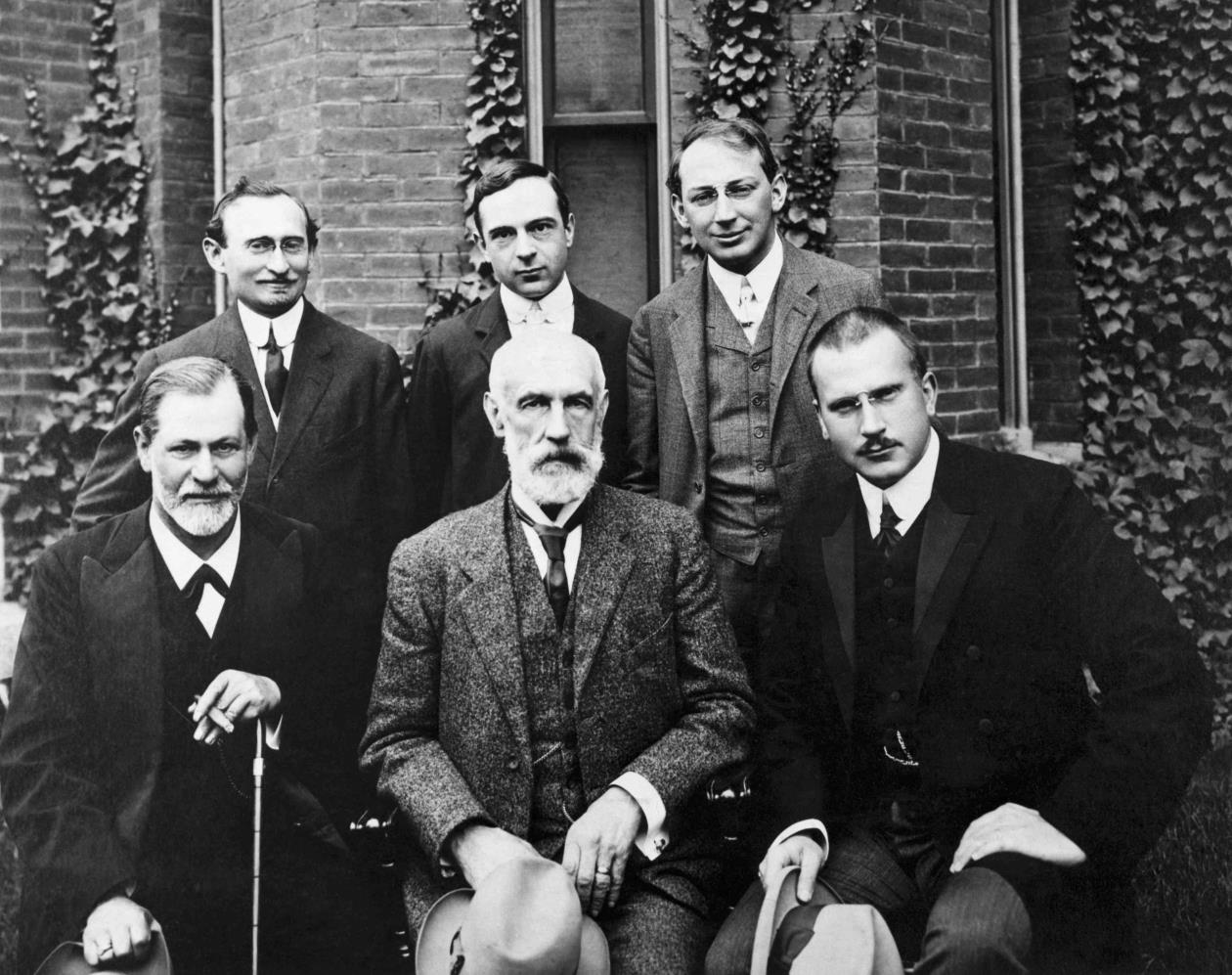
    Sigmund Freud surrounded by other famed early psychologists – Credit: Bettmann Archive

    In the late 19th century, a few critical individuals in the field of psychology emerged onto the scene. Sigmund Freud and Wilhelm Wundt are considered to be the fathers of modern psychology but for wildly different reasons. Let’s break down why. Wilhelm Wundt opened the first psychology lab in 1879 with the purpose of conducting rigorous scientific experiments to determine relationships between different things. In addition to his various experiments on reaction times, and perception, he was also the first to establish an academic journal for psychology research. What’s more, he was the first person to call himself a psychologist! Around the same time, Sigmund Freud emerged on the scene with some influential ideas that would forever shape many theories of psychology.

    Freud believed that much of our behavior is actually driven by our unconscious mind (things we aren’t even aware of). Additionally, he believed that personality was a combination of three central factors, the Id (basic instincts and desires), the Ego (the rationale between the id and reality), and the Superego (moral compass and ideals). In practice, this theory would look like wanting to skip class (Id), knowing you shouldn’t (Superego), and deciding whether or not to skip (Ego). In addition to these contributions, Freud also had important contributions to the creation of talk therapy (sitting down and talking through things with a psychologist) and emphasized the importance of childhood experience on development. However, many critics of Freud claim he went too far with his ideas of childhood (particularly regarding parental relationships and physical attributes). Nevertheless, both Wundt and Freud left a significant impact on the field of psychology and were ultimately the first to lay the groundwork for what was to come.

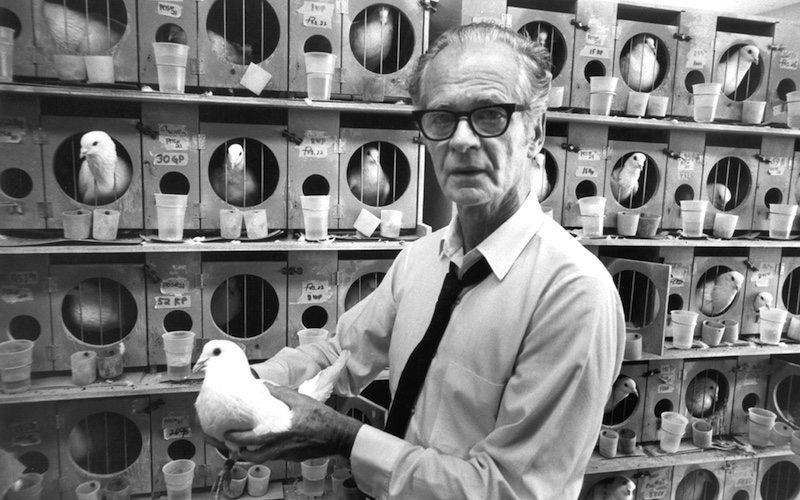
    B.F. Skinner surrounded by experimental birds – Credit: Highbrow

    Thanks to the efforts made by Wundt and Freud, many started to validate the field of psychology as an academic science. In the mid-20th century, many new experimental psychologists would emerge with their own unique theories and experiences that would leave a lasting impact. For example, John B. Watson wanted to shift the focus of the field into only what could be observed as opposed to the earlier theories of Freud who believed that behavior was mainly unconscious. To further this goal set by Watson, B.F. Skinner studied how rewards and punishments shaped behavior. This process was first noticed by Ivan Pavlov when he realized that dogs salivated when he rang a bell as they were expecting food, known as classical conditioning. Skinner built upon this by studying the process of operant conditioning, intentionally focusing on increasing behavior through rewards and decreasing behavior by punishments. A clear example of this comes in the form of schoolwork. If you get a good grade on a test and then get praised for it, you are more likely to study harder to achieve a good grade the next time. Although these psychologists built upon the work of their predecessors to expand our knowledge of behavior, many other psychologists started conducting unethical and infamous experiments.

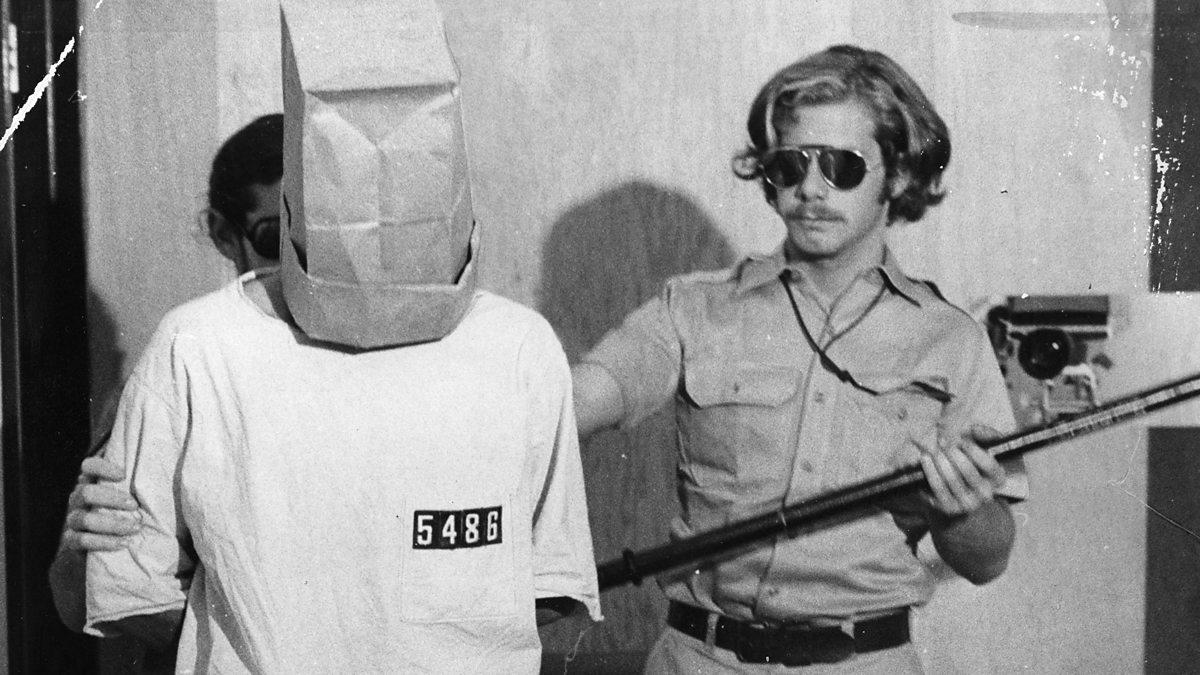
    Stanford Prison Experiment – Credit: BBC News

    Because the field of psychology was just emerging, many safeguards were not yet developed to protect people’s rights or their well-being. Unfortunately, this resulted in many harmful studies. The “Stanford Prison Experiment” involved college students being randomly assigned as either a prisoner or a guard in a fake prison and told them to play their role. This quickly led to the guards abusing their prisoners, forcing the study to end early due to immense physical and psychological harm. Another unethical experiment that took place was actually by John B. Watson himself, and it’s known as the “Little Albert Experiment.” It took the principle of classical conditioning discovered by Pavlov and applied it to the concept of fear in humans. Watson and his colleague conditioned the infant Albert to be afraid of a white rat by banging a loud noise when he was in the presence of the rat, which later caused him to fear all white fluffy things. Other experiments such as the “Milgram Experiment” involved shocking participants and secret government projects such as “MKUltra” used psychological drugs such as LSD on American citizens without their consent. These harmful and unethical experiments are a dark stain on the history of the field of psychology and have resulted in a rigorous review board process that current researchers must abide by to make sure these are never repeated. However, not all the groundbreaking psychological experiments were harmful as a large majority of psychologists actually created a positive impact that is still felt today.

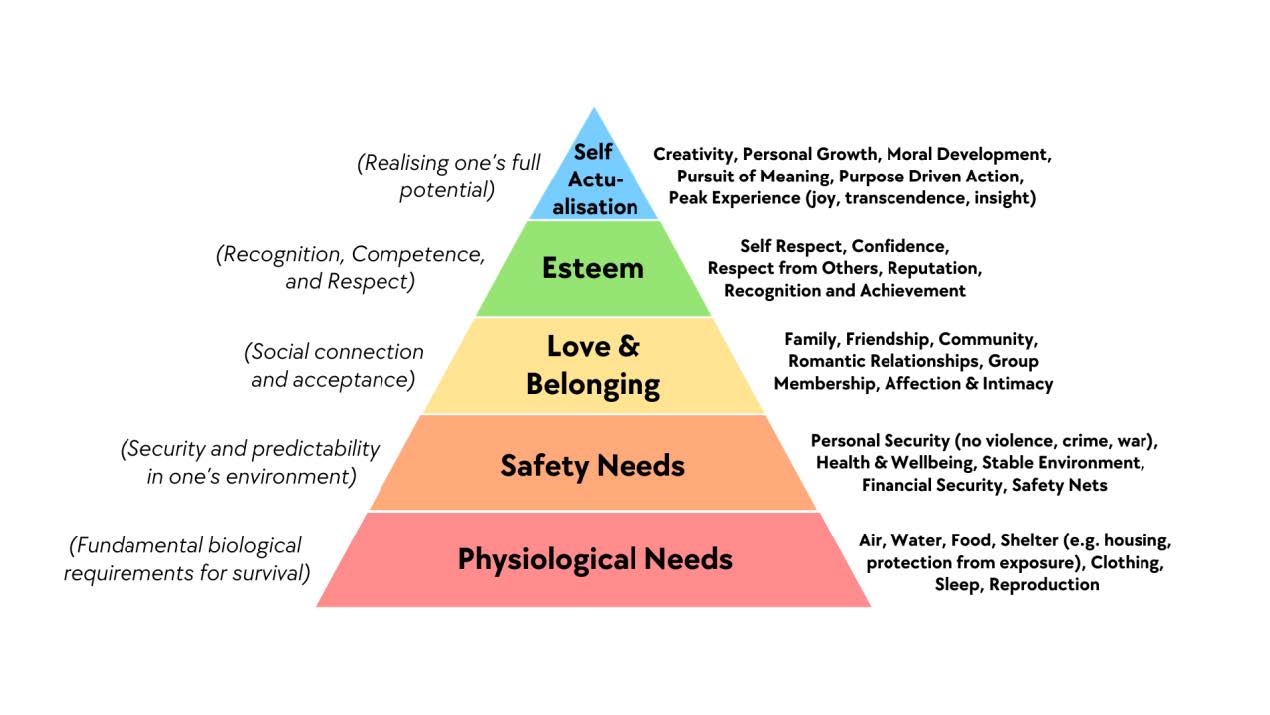
    Maslow’s famed hierarchy of needs

    Various modern theories of psychology have developed such as the Humanistic perspective developed by Abraham Maslow which aims to helping people reach their full potential by focusing first on their basic needs (food, water, security, support, etc.) to help them become their best selves. Additionally, psychologist Carl Rogers took talk therapy to a new level by developing client-centered therapy which emphasized the action the client wanted to take for their own life instead of being told by the therapist what to do. Other modern psychologists have also focused their energy on increasing empathy, positive thinking, and CBT (cognitive-behavioral therapy) to reduce anxiety, depression, and improve decision-making and cognitive ability within people. Because of the great advances that have been made in recent years due to an ethical, rigorous scientific process, we have developed a greater understanding of how the mind influences behavior both in positive and negative ways.

    However, we still have a lot more left to learn as the field of psychology is ever-expanding and becoming more high-tech and involved in multiple different fields of science. New technologies such as fMRI (functional magnetic resonance imaging) allow us to take images of the brain and can help us to better understand the biology of our bodies in the field of neuroscience. The invention of AI (artificial intelligence) also is being used to help psychologists predict behavior and improve therapeutic interventions made by psychologists. Virtual reality therapy and mental health apps are also new immerging technologies to help people get over their fears via exposure therapy and help people stay accountable with the help of their friends and families. All of this to say, the field of psychology is expanding beyond the surface of talking about feelings as it aims to genuinely improve the lives of people.

    As the science of psychology grows, different careers also emerge as psychology becomes more integrated into the culture. For example, psychologists can also work in hospitals as clinicians or psychiatrists, which are medically trained doctors allowed to prescribe medication to sick people. Psychologists can also work in the field of law or crime as forensic psychologists who analyze body language, provide law enforcement evidence at the scene of crimes, or appear in court to help bring people justice. Industrial-organizational psychologists play a major role in determining how best to advertise products and how better to improve workplaces in business and marketing. Athletes and large sports organizations also utilize specialized sports psychologists to help athletes perform under pressure to maintain focus and confidence to win games. Schools also hire psychologists and career counselors to help students determine what direction they want to take by helping students with their own mental health challenges. Effectively every field of work connects to psychology in some way whether you recognize it or not!

    The history of the science of psychology spans thousands of years from great philosophers to modern scientists. Although many mistakes were made along the way, psychologists have learned from those experiments to improve our understanding of the mind and behavior. In the modern era, psychology is integrated into practically every field and serves as a reminder of how in understanding ourselves we can better understand others. If you could design an experiment, what would you choose to study and what other fields would benefit?

  • How I Got into Science

    How I Got into Science

    Loading

    by Everett White

    From a Second-Grade Friday Video to an MD/PhD Dream: How I Got Into Science

    Hi, I’m a biochemistry and molecular biology major at the University of Iowa,
    on the pre-med track and now planning to pursue an MD/PhD. I’m writing it for any high schooler who is curious about science and isn’t sure where to start. My story is not about always knowing what I wanted to be. It’s about following curiosity, changing my mind, and figuring out how I want to use science to help people.

    The Friday Science Video That Started It All

    My very first interest in science goes back to second or third grade. I had a teacher who would show a short video on a science topic every Friday, and afterward we had to write about it. One Friday, the topic was Thomas Edison,
    who invented the light bulb, with a small snippet at the end about Nikola Tesla, a genius when it came to electricity and alternating current.

    Almost every kid in the class was infatuated with Edison. The light bulb was the famous thing, the easy answer, and that was that. But I remember sitting there thinking, why not look into Nikola Tesla’s life and what he did as a scientist, and why didn’t the other kids want to choose him? Whether they were just being naive or thinking about things differently than I was, I started
    looking into Tesla on my own. I read about how great of a human he was and what he did specifically as a scientist. I learned how alternating current ended up being one of the big modern things, instead of direct current, and is used pretty much everywhere.

    That was my first real lesson in how I view science. Both Edison and Tesla were great inventors, but the story everyone agreed on was not the whole story. Things are deeper than they seem, and some things have a way different perspective than other things. That moment sparked my curiosity to look into things deeper, educate myself, and actually learn about a topic instead of just accepting the easy version of it.

    I carried that curiosity all the way through elementary school, middle school, and into high school. I was not shameful about being nerdy about certain topics. If something interested me, I dug into it.

    The Class That Decided My Major

    The other huge milestone for me was high school chemistry, specifically AP Chemistry. A lot of students in that class did not really like it very much. They were doing it to get a good grade on an exam or just to get a grade in the class. I was taking it for credit too, but I will always remember that I would watch videos on the topic before we even covered it in class. I would get
    chapters ahead, and I would always come and ask my teacher about future units because I was so fascinated.

    I was fascinated at how chemicals interact, why they interact, what they are made of, and what is forcing them to interact. Chemistry was about explaining a lot of whys, more than any subject I had taken.
    I knew I wanted to help people, and I wanted to use science to do it. That was a big reason I chose biochemistry and molecular biology as my major. It has a lot of chemistry, but it also applies directly to biology and the study of living things. That was the major I wanted, and I came into the University of Iowa with it declared.

    Changing My Mind, and Changing It Back

    I came in pre-med, with biochemistry and molecular biology as my major, and I thought becoming a doctor would be perfect for using my knowledge of science to help others. That has since evolved a lot over the past years in college. Freshman year, I actually switched my major to engineering. But there was something missing in engineering and tying it with biological life, which didn’t really suit me very much. So I switched back to biochemistry and molecular biology. Looking back, that detour was not wasted. It taught
    me that I am drawn to living systems specifically, not just to problem-solving in the abstract.

    Since then, I have evolved my thinking from just being a doctor to knowing more exactly what I want to do and how I want to do it. I want to pursue an MD/PhD and become a clinician scientist. I want to do research directly on what I practice so I can help improve it. If I am performing a given surgery, or if a certain material is being used in the body, I want to know how the body interacts with that surgery or material and help provide valuable data for research, including research into diseases. The clinic and the lab feed each other, and I want to be in both.

    Latham, Inspire to Aspire, and Why I Want to Teach

    One experience that has been dramatically impactful on my life is the Latham Fellowship at Iowa, which is the class this blog post is being written for.

    The Latham Science Engagement Fellowship is a two-semester program through the Iowa Sciences Academy that helps undergraduate scientists learn to communicate science and design real outreach projects. Going
    through it has shown me that I want to try to reach out to people as much as possible, teach them hands-on what I was taught, and give them ideas. I want to carry that on through my career as a doctor, or whatever I end up doing. I want to help others and teach others, just as those did before me.

    I am also part of an organization called Inspire to Aspire, where we go around and help communities, specifically high schoolers and elementary kids. We educate people on future careers and do activities with them in
    medicine. Whether they want to pursue nursing, dentistry, or medicine, we try to give them knowledge and insights on what to do once they get to college or just get them engaged within healthcare and
    science.

    A big lesson I have taken from all of it is this: not only should you get involved in what you want to do, but you should also know a little bit about the path. Shadow physicians. Shadow people in a career that you may enjoy. You don’t have to be totally for sure you are on the career to start exploring.

    A Quick Tour of Careers in Science

    A big part of why I wanted to write this section is that when I was in high school, I really did not know how many paths there are in science. There are so many majors out there that you can definitely find one that is right for you, and they can all lead on a certain path if you want them to, which I think is amazing. Here are a few I have either considered for myself or watched friends go into.

    Physician (MD or DO). The classic path. You finish your bachelor’s, take the MCAT, go to medical school for four years, and then complete a residency that can range from three to seven or more years depending on the specialty. You can do everything from family medicine to neurosurgery.
    Physician scientist (MD/PhD). This is the path I am aiming for. MD/PhD programs are usually seven to eight years and train you to be both a clinician and a researcher. You see patients and you also run a lab, asking questions about disease that come straight out of what you see in the
    clinic. Many of these programs are funded, which is part of why they are so competitive.
    Research scientist (PhD). If the lab side is what excites you most, a PhD in biochemistry, molecular biology, neuroscience, or another field can take you there. You do not need an MD to make a huge impact on medicine. A lot of the discoveries that change how doctors practice come from PhD-level scientists.
    Biomedical engineer. This is the path I briefly tried, and it is a great fit for people who love both biology and building things. Biomedical engineers design medical devices, prosthetics, imaging tools, and even tissue scaffolds. It is a strong option for someone who wants to be near medicine without going to medical school.
    Dentist, pharmacist, physician assistant, and nurse. These are all real careers in healthcare that do not require medical school but still let you work directly with patients. Each one has its own training pipeline, its own culture, and its own strengths. Through Inspire to Aspire, I have met students who are fired up about each of these, and the world needs all of them.
    Public health, science writing, lab technician, biotech industry. These sometimes get overlooked, but they are very real options. Public health professionals shape policies that affect entire populations. Science writers translate research for everyone else. Lab techs and industry researchers run the experiments that bring new drugs and tools to market. A biochemistry degree can lead to any of these.

    That is what is so cool about science and STEM fields: there is so much you can do.

    What I Would Tell My High School Self

    If you are a high schooler reading this and you are not sure what you want to do, that is okay. I changed majors, changed career goals, and I am still adjusting the picture. A few things I wish I had known earlier. Get curious about something deeper than the easy answer. There is a Nikola Tesla in every topic if you go looking. Shadow people. Pay attention to the parts of the day that excite you and the parts that drain you. You don’t have to be totally for sure you are on the right career to start exploring it. Get involved early in a club, a research lab, a volunteer program, or an outreach group. Some of the most important things I have learned in college did not happen in a lecture hall.

    Science is for people who are willing to keep asking why. If that is you, there is a place in this field for you, and the people who came before you
    want to help you find it. I know I do.