Category: Blog Posts

  • Healthy Body Healthy Home

    Healthy Body Healthy Home

    Loading

    by Grace Johnson

    The prevalence of diet culture and our world’s focus on body image is impossible to ignore. Regardless of age or gender, we are constantly being bombarded with the “ideal” body image. However, aesthetics and health do not always go hand-in-hand. First and foremost, our bodies are meant to carry us through life and allow us to do the things we want to do, so the most important thing we can do is take care of our bodies by giving them the proper fuel and nutrients they need. Unfortunately, diet culture continues to be a significant obstacle in doing so. That is why “Healthy Body Healthy Home” was made, to combat the stigma and misinformation surrounding food and to help people understand how your diet contributes to your health. And just like all the Pictures of Health posters, it was based entirely on science.

    The Science Behind “Healthy Body Healthy Home”

                When it comes to energy, metabolism, and structure, the human body requires three types of macronutrients – protein, carbohydrates, and lipids.[1] The specific chemical makeup of each of these macronutrients contributes to their unique role in keeping the body functioning, which is why a balanced diet of all three is crucial for maintaining wellness and avoiding negative health outcomes. Both excess and deficiency of these macronutrients can lead to significant and long-term issues, though the potential consequences look different for each one.

                Proteins are large molecules made up of amino acids – the basic building blocks for the muscle and structure of the human body. Some amino acids can be made by the body on its own and are called non-essential, but other amino acids can only be obtained through food, and thus are called essential since they absolutely have to be a part of our diets. Common examples of protein-rich foods are animal bi-products like meat, eggs or dairy, and some plant-products such as beans, nuts and soy.[2] When dietary protein is digested, it provides amino acids and other important elements like Nitrogen and Sulfur for use in building body structures like skeletal muscle, which is then used to generate important immune components, hormones, and enzymes.[1][3] Since the body is constantly breaking down muscle mass and using up its free amino acid supply, there is a certain baseline amount of dietary protein necessary for muscle maintenance that varies between each person depending on age, current health status, and general level of activity.[3] Protein is also a source of energy, but not nearly as efficient as other macronutrients. With its significant role in muscular generation and immuno-compound synthesis, a deficit of protein can be very harmful, especially for the growth and development of children and the preservation of skeletal muscle into old age. Some symptoms of protein deficiency can be stunted growth, muscle wasting, poor absorption of micronutrients, and immunodeficiency.[1] While the harms of consuming too little dietary protein are clear, there is not much evidence pointing to the harms of consuming too much. However, overconsumption of protein is likely to cause a deficit of other important macronutrients and result in negative health effects. Therefore, the USDA guideline recommends that protein makeup 10-35% of your daily food intake[2], but this percentage should also be tailored to meet each individual’s physiological needs with the guidance of a health and nutrition expert.

                Carbohydrates are long chain molecules made up of a 1:2:1 ratio of carbon, hydrogen, and oxygen, and can be digested and made into glucose – one of the primary molecules for generating energy in the body.[4] The length of the chains determines how fast the body can digest and use different carbohydrates, with short monosaccharides (meaning “one sugar”) called simple carbohydrates and long polysaccharides (meaning “many sugars”) called complex carbohydrates. Simple carbohydrates are usually found in sweeter foods like fruits, honey, or milk, and can be broken down quickly and easily due to their shorter chain length. Complex carbohydrates are much larger molecules that take longer to break down, often found in starches and grains such as potatoes, rice, and pasta.[2] Fiber is also a complex carbohydrate found in whole grains and fruits, but the human body is unable to break it down. This unique characteristic makes it important for assisting with the health and cleanliness of the GI system.[4] As one of the most easily accessible forms of energy within the body, dietary carbohydrates are very important and are recommended to make up 45-65% of your daily food in-take.[2] This percentage could be even greater for individuals who are exerting more energy than just their standard metabolic levels, such as when preparing for an athletic competition or when pregnant. However, a regular excess of carbohydrates is linked to a variety of negative health outcomes such as Type 2 Diabetes, elevated blood pressure, and obesity.[1] Individuals with diabetes also need to regularly monitor the amount and type of carbohydrates in their diet due to their direct impact on blood sugar levels. Carbohydrate deficit is a much rarer issue than carbohydrate excess, and also has less distinct impacts since the body can make up for it by generating energy in multiple different ways. The main concern when it comes to carbohydrate deficits is that the lack of carbohydrate-containing foods would cause deficiencies of important micronutrients, like the vitamins and compounds found in fruits and grains.[1] Thus, it is best to maintain an appropriate balance of carbohydrates in your diet that will best serve your specific body, health condition, and lifestyle.

                Lipids are molecules made up of a backbone structure (called a glycerol) and a varying number of carbon chains (called fatty acids). The atomic bonds within these chains are what determine the type and characteristics of the lipid.[5] Lipids are often only associated with fat and weight gain. However, they are historically one of the most important macronutrients for survival due to the function of fat deposits as a form of long-term energy storage within the body. Lipids are also important for the structure and function of membranes, absorbing crucial fat-soluble vitamins, making hormones, and the insulation and cushioning of our body and organs.[6] The three main types of dietary lipids are saturated fats, unsaturated fats, and trans fats. Saturated fats are lipids with fatty acid chains made up of only single bonds, meaning they are very straight and easy to stack, which makes them more likely to be in a solid form at room temperature. Common examples of saturated fats are butter, cream, and meats with high fat contents. Too many saturated fats in the diet are known to cause high, unhealthy cholesterol levels, so it is important to consume them in moderation.[2] Unsaturated fats have fatty acid chains with double bonds that cause the chains to bend and curve. This means they are generally found in liquid forms like olive or canola oil, or found in foods like avocados, nuts, and fatty fish. Due to their more liquid form, unsaturated fats are referred to as “healthy fats” because they do not increase cholesterol and contribute to heart disease the same way saturated fats can.[2] Trans fats are unique because their fatty acid chains contain double-bonds like unsaturated fats do, but they are a different shape of double-bond that causes the chain to be more straight like saturated fats. This type of structure is generally man-made through a process called hydrogenating, and it is widely recommended to avoid trans fats when possible. Things like margarine and shortening are trans fats and can often easily be replaced in recipes by a saturated or unsaturated fat.[2] The health effects of consuming too many lipids are generally well-known, with the most significant issues being heart disease, diabetes, elevated blood pressure, and obesity. Lipid deficiency, though rare, can also be just as harmful to your health. Just like there are essential amino acids that must be included in the diet, there are essential fatty acids as well such as Omega-3 and Omega-6. Essential fatty acids are critical for the absorption of fat-soluble vitamins, so chronic lipid deficiency can lead to damaging micronutrient deficiencies as well.[1] That is why the USDA recommends lipids make up 20-35% of our diets, with an emphasis on unsaturated fats over saturated fats.[2]

    The main takeaway from this information is that balance is the key to a healthy diet. Too much or too little of any one macronutrient can be harmful, and each macronutrient plays a unique and important role in our biological and physiological systems. As each person’s metabolic and caloric needs are different, it is always important to seek guidance from a physician or licensed health professional when trying to find a new dietary plan. However, with encouragement, support, and the knowledge that all food can be “healthy” food, a better and more balanced lifestyle is within reach.

    [1] Espinosa-Salas, S., & Gonzalez-Arias, M. (2023, August 8). Nutrition: Macronutrient intake, imbalances, and interventions. U.S. National Library of Medicine. https://www.ncbi.nlm.nih.gov/books/NBK594226/#:~:text=Excess%20Macronutrient%20Intake&text=Chronic%20excess%20energy%20intake%20from,outcomes%20associated%20with%20increased%20adiposity.

    [2] Avita Health System. (2019, September 5). Macronutrients: A simple guide to macros: Avita health system. Avita Health System | About Life. About You. https://avitahealth.org/health-library/macronutrients-a-simple-guide-to-macros/

    [3] Carbone, J. W., & Pasiakos, S. M. (2019, May 22). Dietary protein and muscle mass: Translating science to application and Health Benefit. Nutrients. https://www.ncbi.nlm.nih.gov/pmc/articles/PMC6566799/

    [4] Ludwig, D. S., Hu, F. B., Tappy, L., & Brand-Miller, J. (2018, June 13). Dietary carbohydrates: Role of quality and quantity in chronic disease. BMJ (Clinical research ed.). https://www.ncbi.nlm.nih.gov/pmc/articles/PMC5996878/ 

    [5] Field, C. J., & Robinson, L. (2019, July 1). Dietary fats. Advances in nutrition (Bethesda, Md.). https://www.ncbi.nlm.nih.gov/pmc/articles/PMC6628852/

    [6] LibreTexts. (2023, February 1). 6.2: What are lipids?. LibreTexts Medicine. https://med.libretexts.org/Courses/American_Public_University/APUS%3A_Basic_Foundation_of_Nutrition_for_Sports_Performance_(Byerley)/06%3A_Lipids_Basics_-_Another_Energy_Source_for_the_Athlete/6.02%3A_What_Are_Lipids
  • Jacques Dubochet: Putting the Cool in Cryo-EM

    Jacques Dubochet: Putting the Cool in Cryo-EM

    Loading

    JacquesDubochet
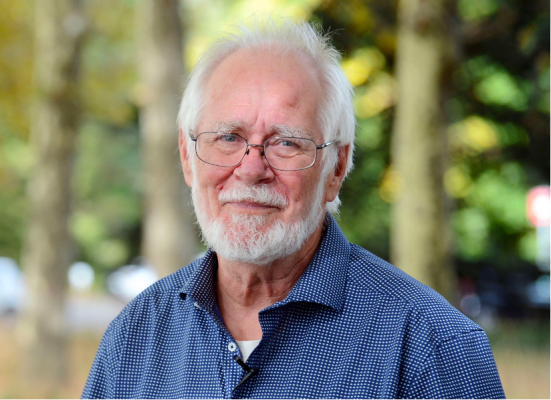
    Dr. Jacques Dubochet, a Nobel Prize Winner of Chemistry (5).

    By Shivani Manikandan

    It might be hard to believe that a dyslexic student who nearly failed high school and was even a college dropout is now a Nobel prize-winner in chemistry, but this is exactly the life story of Dr. Jacques Dubochet (2). 

    Dubochet is a Swiss biophysicist who won the Nobel Prize in Chemistry in 2017. His groundbreaking research in cryogenic-electron microscopy (Cryo-EM) has revolutionized the field of structural biology, allowing scientists to visualize the structures of biological molecules in unprecedented detail (1).

    Despite his many achievements, Dubochet’s academic journey was not always easy. He struggled with dyslexia as a child, which made reading and writing a challenge (2). Throughout his schooling years, Dubochet did not get good grades and nearly failed high school. His academics were so poor that he had to receive special permission to advance through his coursework and not be held back. This continued into his college years, and Dubochet says that at times dyslexia fueled his laziness and allowed him to not put in the effort he should have. Fortunately, he had very supportive parents that pushed him to excel in other areas, and teachers that believed in his abilities despite his poor grades. However, after his second year, Dubochet was dismissed from college for his failing grades, and took on some temporary jobs before returning to college and getting a PhD (1). 

    Dubochet describes his approach to life as follows, “The need for understanding is my way of finding my way in life”, and this was exactly his approach to his career as well (1). His pathway to obtaining a PhD and studying biology was also unconventional. Hoping to fulfill the need to better understand the world around him, Dubochet first earned a diploma in physics. However, he was later influenced by prominent discoveries of the time by researchers like Watson and Crick and wanted to solve biological problems under the framework of physics. In order to do so, he worked to obtain a PhD in Biology and became a biophysicist. 

    This ultimately led to one of his greatest contributions to the field of biology. Dubochet, along with Joachim Frank and Richard Henderson, was awarded the Nobel Prize for Chemistry for their discovery of Cryo-EM. Specifically, Dubochet’s contribution to this finding was centered around a process called vitrification (4). At the time of his discovery, it was difficult to understand the molecular structure of biological compounds. Most studies related to this had to be conducted with the help of X-ray Crystallography, a process that requires the biomolecule to be frozen down to crystals. However, this was problematic as it was not always possible to force biomolecules into a crystalline structure. This is where Dubochet comes in. Vitrification is a process of rapid cooling that allows one to preserve the structure of a biomolecule and allows for observation of the structure in solution, without crystallization (4). This method, in combination with Henderson’s discovery that samples can be understood by their interaction with a beam of electrons and Frank’s analysis of this data, allowed for Cryo-EM. This made a large impact on the scientific community (7). Specifically, it allowed for a broader range of molecules to be visualized and enabled the pharmaceutical industry to customize drugs to be able to bind to the specific shapes of molecules (3). 

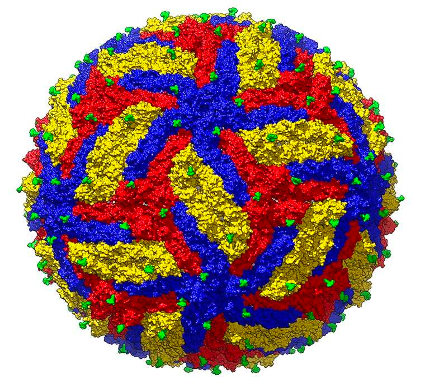
    In the real world, it made a large impact on the development of many medications, notably the vaccine for the Zika Virus (3, 6). During a time when there was overwhelming spread of the Zika Virus, the Cryo-EM structure discovery of the virus was crucial in progressing the development of the vaccine, because it helped scientists visualize the changes of virus as it develops over the course of its life cycle, which provided important insight into how to stop the virus life cycle (3, 6). In addition to the Zika Virus, Cryo-EM also helped scientists understand the respiratory syncytial virus, SARS-CoV-2, and other proteins important to the progression of cancer (7). The applications of Cryo-EM are immense, and it’s especially remarkable considering the atypical path that led Dubochet to help make this discovery.

    At the University of Iowa, the departments of Biophysics and Biochemistry are applying Dubochet’s discovery, Cryo-EM, in a variety of ways to help solve problems in biology. Specifically, some experts are studying the role of a specific transcription factor’s structure in binding to different areas of the genome and regulating gene expression. Others are studying the role of specific protein structure in relation to muscular dystrophy and potential ways to combat it (8, 9).

    Cryo-EM Structure of the Zika Virus (3).

    In terms of studying transcription factors, experts hope to better understand what change in the transcription factor, the Glucocorticoid Receptor, causes it to bind to a specific region of the genome over another. Additionally, they hope to better understand the role of glucocorticoid receptors in the treatment of acute lymphoblastic leukemia. They hope to explore these questions by looking at the structures of the molecules involved (8).

    With regards to muscular dystrophy, changes to a specific protein complex called dystrophin-glycoprotein can affect the type of dystrophy a person has. Experts are working to uncover how changes to the structure of this complex can affect the way it interacts with its surroundings and its overall function. This information could provide insight into possible treatment options for this disease. The structural study of such a project relies on methods like Cryo-EM (9).

    Even though Dubochet’s journey to the scientific field was unconventional, he was able to make such a large impact on the way we see the biomolecules within us. Dubochet serves as a reminder that no student should be judged solely by their grades or their ability to conform to conventional standards of intelligence, and that a true scientist is defined not by their career path but by their curiosity, perseverance, and willingness to learn.

    Links to research groups in the University of Iowa:

    1)    Transcription Factors

    2)    Muscular Dystrophy


    The information for this article was obtained from the following sources:

    1)    https://www.nobelprize.org/prizes/chemistry/2017/dubochet/biographical/

    2)    https://www.thelocal.ch/20171006/i-was-very-bad-in-school-swiss-nobel-prize-in-chemistry-2017-winner

    3)    https://www.thermofisher.com/blog/atomic-resolution/cryo-em-gives-researchers-a-detailed-view-of-the-zika-virus-structure/

    4)    https://www.chemistryworld.com/features/cryo-em-a-cold-hard-look-at-biology/3008131.article

    5)    https://www.biozentrum.unibas.ch/news/detail/mini-symposium-with-nobel-laureate-jacques-dubochet

    6)    https://www.pnas.org/doi/10.1073/pnas.1609721113

    7)    https://pubs.acs.org/doi/10.1021/acscentsci.0c01048

    8)    https://medicine.uiowa.edu/biochemistry-molecular-biology/profile/miles-pufall

    9)    https://medicine.uiowa.edu/physiology/profile/kevin-campbell

  • The Knight In The Shining Lab Coat and His Journey to the Nobel Prize

    The Knight In The Shining Lab Coat and His Journey to the Nobel Prize

    Loading

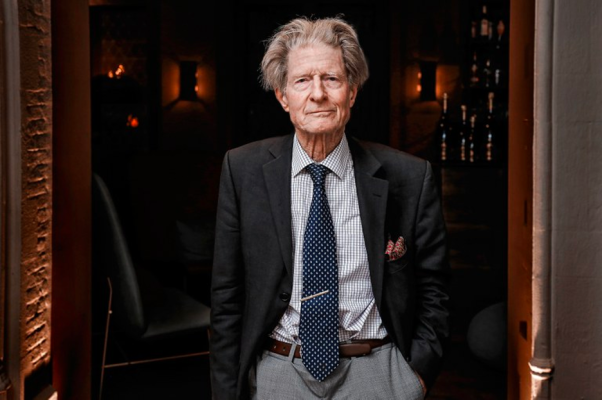
    image of john gurdon
    Sir John Gurdon, a Nobel Prize winner for Medicine (11).

    By Shivani Manikandan

    “I believe he has ideas about becoming a scientist; on his present showing, this is quite ridiculous […] and it would be sheer waste of time, both on his part, and of those who have to teach him. (1)”

    Imagine you are 15 years old, opening your report card with your parents, and your teacher has written that. Imagine being told you are so bad at your science courses that you are no longer allowed to study them, and instead you are to study ancient and modern languages. Unfortunately for Sir John Gurdon, he did not have to imagine these things, because he experienced them firsthand. Fortunately, he went on to have a very successful career in science, one that led him to win the Nobel Prize in medicine and to be knighted by the queen of England (2).

    Growing up, Gurdon was always interested in the development of moths and butterflies and initially wanted to pursue zoology (1). Sadly, because of his academic struggles, he continuously faced obstacles on his career path. For example, because he was forced to study languages prior to applying to college, he was unable to get into the zoology program he wanted to study (2). Without being disheartened, Gurdon took a year to study the course work he missed out on and reapplied and was accepted to the zoology program at Oxford University! However, after his undergraduate years, upon applying to doctoral programs in entomology, he was rejected despite having discovered a new species of flies. Still devoted to science, he decided to pursue developmental biology with Dr. Michael Fischberg (2).

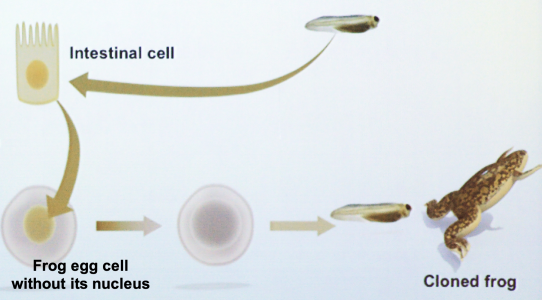
    While his career path was anything but streamlined, science would not be the same today without his contributions to developmental biology. During his time, biologists were unsure if all the cells in the human body have the same genetic composition. Specifically, some researchers of his time found that once cells became a part of a specific organ (through a process called cell differentiation), they no longer contained the genetic material to become any other type of cell (3). However, Robert Briggs and Thomas King challenged this idea by demonstrating that when the nucleus of a cell in an intermediate stage of development is transplanted into a frog egg cell lacking a nucleus, a healthy frog can be grown (6). Curiously, their success rate decreased as the developmental stage of the transplanted nucleus progressed. This ultimately sparked Gurdon’s work, in which he transplanted the nucleus of a well-differentiated intestinal cell into a frog egg cell lacking a nucleus. After numerous failures, he was able to show that a healthy frog can be grown, which helped prove that cells do not lose genetic material as they differentiate and that they all contain the same genetic material. This was his Nobel Prize winning discovery (3).

    Screen Shot 2023-03-09 at 1.12.30 AM
    The above figure outlines the foundational discovery behind Sir John Gurdon’s work. His work showed that when a nucleus from a differentiated cell is transplanted into a frog egg cell without a nucleus, a healthy frog can be produced (2).

    The work of Gurdon and his joint Nobel Prize winner Dr. Shinya Yamanaka has made a dramatic impact on stem cell research. Gurdon’s work laid the foundation for the Yamanka’s discoveries on how pluripotent stem cells can be induced from differentiated cells. Pluripotent cells can differentiate into most of the cells in our body. This discovery has huge implications for stem cell therapies because it allows for a patient’s own cells to be used in their transplants or other treatments, which decreases risk of immune rejection (10). Additionally, induced pluripotent stem cells are used in creating disease models that capture the patient-specific causes of a disease and aid in creating a more realistic model for study (7). The implications of Gurdon’s discovery are still being explored, and he still continues to work in this field today. Now, he hopes to understand the mechanisms involved in inducing pluripotent stem cells (5).

    At the University of Iowa, there are many researchers working on projects that Gurdon’s work laid the foundation for. You can find work that is related to Gurdon’s discoveries in the links below. Specifically, you can find experts studying the development of facial structures and experts that are working on using stem cells to develop gene therapies for cystic fibrosis (8, 9).

    Working off the understanding that all cells have the same genetic material, researchers in the study of facial structure development are attempting to selectively express the necessary gene to regenerate specific tissues from stem cells. These tissues can then be transplanted to patients for various ailments. If the stem cells used in this process are iPSC from the patient, this could help reduce the risks associated with such a procedure (8).

    In terms of the studies related to cystic fibrosis, researchers are working to understand the mechanisms behind the process of stem cells repairing the airway within our lungs. Using this understanding, they hope to use gene therapy to control stem cell proliferation and induce repair in patients with cystic fibrosis (9). 

    Even though Gurdon began studying this question when he was a PhD student, it was not until he was an established scientist, more than 50 years later, that he was recognized for this discovery (4). In his talks, Gurdon emphasizes that he faced challenges that did not have readily available solutions and oftentimes he had to build the equipment he needed. Additionally, he talks about how even when he had the tools, his experiments failed repeatedly in the early stages of the project (1). His story highlights the commonality of failures in science and the importance of perseverance and resilience despite them. If he had not been persistent throughout his scientific career, our understanding of human development would not be the same.

    Links to research groups in the University of Iowa:

    1)    Development of Facial Structures

    2)    Therapies for Cystic Fibrosis


    The information for this article was obtained from the following sources:

    1)    https://www.oxfordstudent.com/2019/10/27/prof-sir-john-gurdon-from-failure-to-nobel-prize/

    2)    https://achievement.org/achiever/sir-john-gurdon/

    3)    https://www.youtube.com/watch?v=YNvMg1C1WK4&ab_channel=FacultyofMedicineLundUniversity

    4)    https://www.nobelprize.org/prizes/medicine/2012/gurdon/facts/

    5)    https://www.gurdon.cam.ac.uk/people/john-gurdon/

    6)    https://embryo.asu.edu/pages/transplantation-living-nuclei-blastula-cells-enucleated-frogs-eggs-1952-robert-briggs-and

    7)    https://www.thermofisher.com/blog/behindthebench/disease-modeling-using-induced-pluripotent-stem-cells/#:~:text=iPSCs%20are%20a%20valuable%20tool,modeling%3A%20Parkinson’s%20disease%20and%20cardiomyopathy.

    8)    https://medicine.uiowa.edu/acb/profile/brad-amendt

    9)    https://medicine.uiowa.edu/acb/profile/john-engelhardt

    10) https://www.ncbi.nlm.nih.gov/pmc/articles/PMC4313779/#:~:text=The%20use%20of%20iPSCs%20may,disease%20modeling%20and%20gene%20therapy.

    11) https://nieuws.kuleuven.be/en/content/2018/nobel-prize-winner-john-gurdon-growing-body-parts-is-not-science-fiction