Category: Blog Posts

  • Charles Darwin: His Evolution from Bad Grades to Big Theories

    Charles Darwin: His Evolution from Bad Grades to Big Theories

    Loading

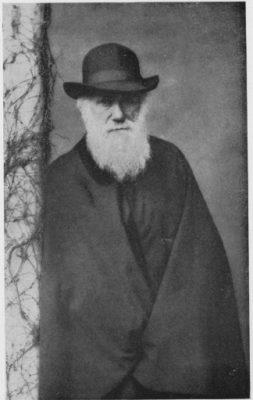
    image of charles darwin
    72 year old Charles Darwin getting ready to go on a stroll (2).

    By Shivani Manikandan

    “You care for nothing but shooting, dogs, and rat-catching, and you will be a disgrace to yourself and all your family” (2).

    Who do you think this quote is about? You may be surprised to know it is about one of the most well-known scientists of the 19th century. Charles Darwin, often called the father of evolution, is credited with making pivotal discoveries that transformed the field of biology. The quote above is from Darwin’s autobiography, where he describes his own father’s disappointment with his academics. In his own words, “When I left the school I was for my age neither high nor low in it; and I believe that I was considered by all my masters and by my Father as a very ordinary boy, rather below the common standard in intellect” (2).

    In simpler words, Darwin, like many of us, was an average C student in school. His father, a respected physician, was so disappointed with his work that he sent Darwin off to sea aboard the HMS Beagle in 1831 (2). However, to everyone’s surprise, this voyage resulted in the development of one of the most influential theories in biology: natural selection.

    While we often think of scientists as lone thinkers, the greatest discoveries are really the culmination of years of gradual progress by many individuals. Darwin’s discovery of natural selection was no different. During the Beagle voyage, Darwin had time to read the theories of thinkers like Thomas Malthus and Charles Lyell. Malthus drew connections between food resources and populations, suggesting that the environment of a population impacts its growth (1). Additionally, scientists like Lyell discussed the geological evolution of the world over long periods of time. These ideas and more led Darwin to think about how major environmental changes can cause species to change over time (6).

    Aside from proposing transformational theories like natural selection, Darwin also changed how the natural world was studied. Unlike other theorists of his time, he was committed to an evidence-based approach to science. From finches to pigeons and beetles to barnacles, Darwin spent much of his later life collecting evidence to support his theories (1, 4). 

    Like any good theory, natural selection led the scientific community to many more questions. In his book explaining natural selection, The Origin of Species, Darwin admitted to not knowing the mechanism of evolution. What inside an organism causes variations? How are variations passed on (6)? Natural selection was a steppingstone for various fields of science and is a foundational concept in our understanding of the past, present, and future. From the origins of the human species to the inheritance of genetic diseases to the impact of humanity on the ecological future of the planet, our understanding of the natural world stems in part from the work of an average C student (3).

    At the University of Iowa, you can find work that is related to Darwin’s discoveries in the links below. Specifically, you can find experts studying the evolution of sexual reproduction and its importance to biodiversity, the origin of eukaryotes and how they differ from prokaryotes, the stress responses within species that result in adaptation, and more (7, 8, 9).
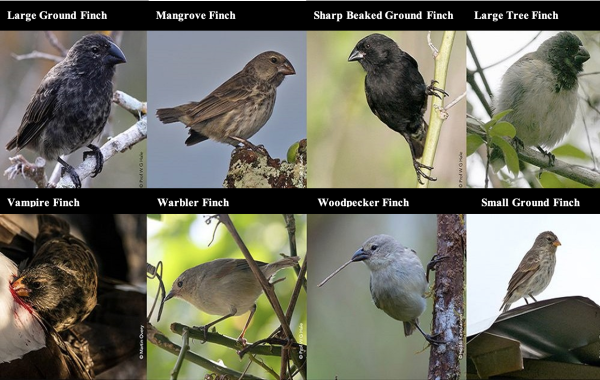
    labeled image of darwin's finches
    There are 17 finches that are considered Darwin’s finches and above are eight that are endemic to the Galapagos Islands (10).

    In the study of sexual reproduction, one question that UIowa researchers are investigating is the role of sexual reproduction on the composition of genes and their structure in snails. They are also working to understand how rare asexual reproduction is and its relation to the accumulation of harmful mutations (7). These questions will help us understand the value of biodiversity in a world where global warming and other environmental changes pose a threat to it. 

    In relation to the origin of eukaryotes, researchers are working to understand how important processes such as meiosis came to exist, and how different eukaryotes relate to each other (8). These finds can help improve our understanding of how eukaryotes became so diverse and provide insight into the cellular processes in our body. 

    Regarding the evolution of stress responses, researchers believe that a better understanding of how species respond to stress and how this is passed on can shed light on how the microbiota inside humans evolve over time to become pathogenic as their environment changes (9). These are just a few examples of how Darwin’s work continues today, and how far his ideas have come.

    I hope Darwin’s story serves as a reminder that your academic struggles do not define your ability to contribute to science or prevent you from being a revolutionary. In the words of Darwin himself, “One lives only to make blunders” (5). Don’t let your academic blunders hold you back. Darwin serves as an example that the most important characteristic of a scientist is curiosity, so follow your curiosity and learn more with the links below!

    Links to research groups in the University of Iowa:

    1)        The Evolution of Sexual Reproduction

    2)        The Origin of Eukaryotes

    3)        The Evolution of Stress Responses


    The information for this article was obtained from the following sources:

    1)        https://evolution.berkeley.edu/the-history-of-evolutionary-thought/1800s/natural-selection-charles-darwin-alfred-russel-wallace/

    2)        http://darwin-online.org.uk/content/frameset?viewtype=text&itemID=F1497&pageseq=28

    3)        https://www.nature.com/scitable/spotlight/charles-darwin-7567158/

    4)        https://education.nationalgeographic.org/resource/hms-beagle-darwins-trip-around-world

    5)        The Correspondence of Charles Darwin, Volume 9: 1861

    6)        https://www.youtube.com/watch?v=dfsUz2O2jww&ab_channel=CrashCourse

    7)        https://biology.uiowa.edu/people/maurine-neiman

    8)        https://biology.uiowa.edu/people/john-logsdon

    9)        https://biology.uiowa.edu/people/bin-z-he

    10)   https://galapagosconservation.org.uk/wildlife/darwins-finches/
    Facebook
    Twitter
    Pinterest
    Email

  • Nuclear = Clean Energy

    Nuclear = Clean Energy

    Loading

    By Divija Sharma |

    The Hancher Auditorium was roaring with applauses the entire evening, for Bill Nye had graced the campus with his presence after postponing for years at that point. The main theme of his lecture was ‘Climate Change and Alternative Energy Sources for a Sustainable Future’. Throughout the 90 minutes, I hoped he would talk about nuclear energy as one of the cleanest energy sources out there, but he did not even mention it. So, I wrote a question asking about the future of nuclear energy in America and he expressed visible discomfort with a scrunch of his face and a shrug accompanying the brief yet adequately disappointing response, “We’ve tried but it’s too unreliable with its safety so I do not think of it as an immediate solution to the climate crisis.”

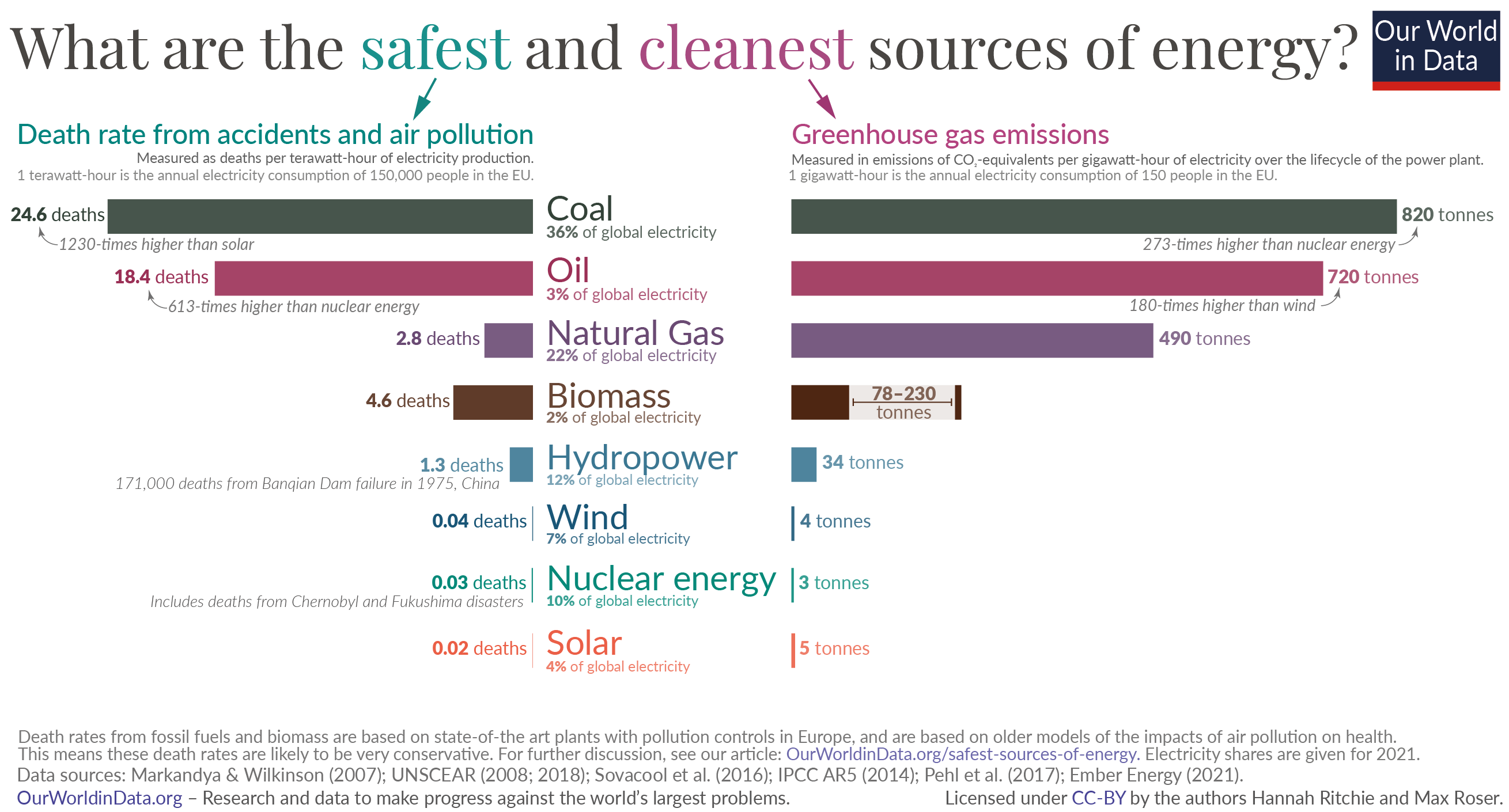
    Nuclear energy is the cleanest and 2nd safest source of energy available to mankind presently. With newer designs, most power plants can have reactors that cannot physically go into core meltdown by using radioactive thorium, which is cheaper and more plentiful, to replace uranium. The non-uranium waste does not take decades to degrade and can be stored and recycled easily. All these factors make nuclear energy suitable for a future where we are actively trying to undo the widespread pollution and growing towards a more energy efficient technological landscape.

    safest form of energy bar chart

    However, the public and even a science communicator hold plenty of apprehensions about nuclear energy making it a controversial issue in our society. Any piece of vocabulary involving the words ‘nuclear’ and/or ‘radioactive’ is bound to elicit negative emotions (mostly fear) from many people. The association, firmly established to its implicit status by media’s repetitive chants of the danger anything ‘nuclear’ brings, is hard to unlearn.

    To address such a controversial matter in science, one must provide an insight into our thought processes like implicit associations first and then follow with facts. Covering up or trying to erase pre-existing notions about nuclear energy would have been a futile quest so deconstructing the opposing argument apart should be the ideal strategy. Yes, the Chernobyl nuclear reactor witnessed some disastrous conditions but around 60 deaths were recorded in all the decades following it which is less than the number of deaths caused by extreme weather in the States in 2020.

    It is also important to concede to ensure the other person does not defensively shut down on listening – I understand that the indirect death toll is debated upon and paranoia may have led to people avoiding the areas altogether. However, these incidents are easily remembered because they are relatively rare occurrences which are isolated in their timeframe compared to the continuous harms and uncountable deaths from coal and fossil fuel burning.

    In addition to all this, one must always be armored with anecdotes and analogies. Narrative grips people. I usually talk about villages in my home state in India being powered by a local nuclear plant. This idea of power production from nuclear fission came from the makings of a weapon of mass destruction – the atomic bomb, but the fertilizers that have led to enough grain production for the world came out of Nazi research on nitrogenous gases. Good things can have dark origin stories sometimes. Like my extensive research on nuclear energy from being displeased by Bill Nye.

    What do you think are some other ways to add to dinner table discussions about nuclear reactors without stirring up too much heat? (pun unintended)

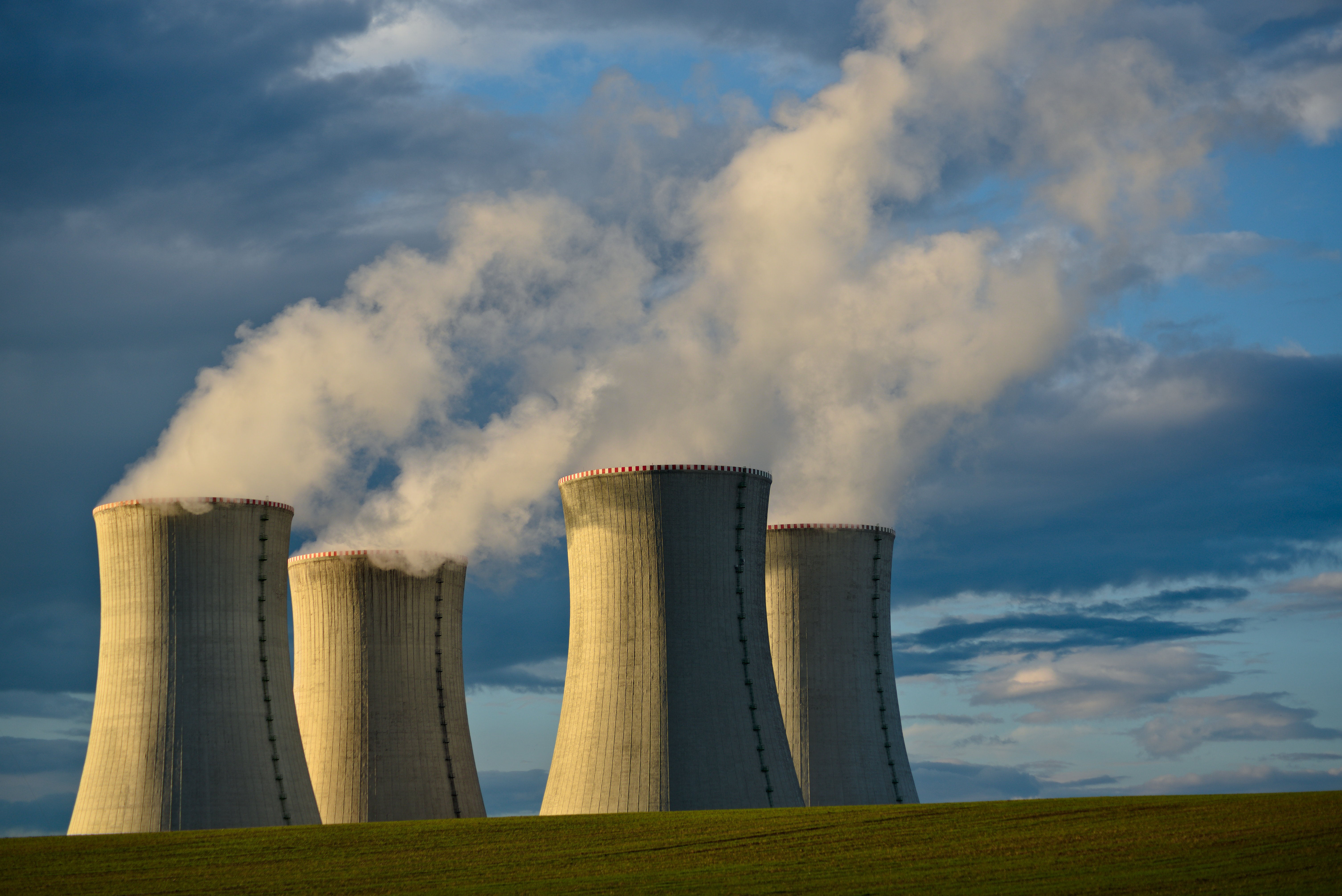
    Rawatbhata Nuclear Power Plant, Rajasthan, India

    Sources and useful links:

    https://www.pewresearch.org/internet/interactives/public-scientists-opinion-gap/

    https://ourworldindata.org/safest-sources-of-energy

  • A Personal Testimony on Clean Living!

    A Personal Testimony on Clean Living!

    Loading

    Author: Ashton Knatz |

    Throughout this blog, I have discussed several common household products and their cleaner, more sustainable alternatives, as well as the usefulness of the EWG rating tool. However, there’s a lot that goes into creating a more sustainable lifestyle, and there are a lot of changes that must be considered. This can make living a sustainable lifestyle complicated and making the switch to cleaner products overwhelming if you take on everything at once. For this reason, it’s important to take things one step at a time and make one switch at a time. In addition, talking with someone that has experience in making sustainable choices can be very helpful!

    I had a great opportunity to talk with a family friend about their transition to living a clean lifestyle. Erika Hempstead has done a considerable amount of research over the past few years to implement sustainable lifestyle choices into her everyday life. We talked about different labels to look out for when shopping, which produce you should buy organic, and the EWG rating tool, among other things. Erika’s advice on taking steps towards a more sustainable lifestyle was very helpful, and I learned a lot from her, so I have decided to publish some parts of our conversation.

    ● When did you begin transitioning towards a clean lifestyle?
    ○ It was around when I became pregnant with my first child that I started to make bigger changes, because [me and my husband] wanted to equip our kids with the knowledge to make better choices… It was baby steps. [My child] is thirteen now, and I’m still learning.

    Have media helped you in this transition towards a clean lifestyle, or would you say
    they’ve hindered your transition?
    ○ When you look into the right groups on social media, they can be very helpful… If you can get into the clean living groups, a lot of them have already done the research for you, and you don’t have to do it yourself. Media have helped me because true, green products are starting to get more attention.

    Are there research databases like the EWG that can be used to find more research on
    clean products?

    ○ The search engines that you use are important… Using search engines like Google Chrome doesn’t make sense because you see what they want you to see, and there is a lot of censorship. Using search engines like DuckDuckGo and other engines that are a little more secure will give you more raw research.

    ● What would you say are the worst ingredients in products to keep an eye out for?

    ○ The more processed the product is, the further you want to stay away from it. I encourage people to shop the perimeter of the store. If the item has an expiration date, that’s what you want to buy, and if it does not have an expiration date, then stay away from it.
    ○ The big things for me are allergens and sugar. I always tell people to minimize things that have gluten in them, because it is very reactive in most people, as well as sugar.
    ○ If you can’t pronounce the ingredient, just stick it back on the shelf.

    Have you found that certain ingredients are listed as something else, or bypass
    regulations? How do you overcome this?

    ○ The biggest place that this happens in the United States is the supplement arena, because there are no regulations on them. There could be ingredients in them that are not listed on the label. For supplements, purchase something that is labeled as being third-party tested.

    Are there any brands for general household items that you have found you like, or do you
    try to make your own products?

    ○ I do both – when I can, I use items found around my home, such as vinegar and baking soda.
    ○ For cleaning products, I like Branch Basics, which is a concentrate that comes in a bottle. Depending on the type of cleaner you want to use it for, you add the concentrate to different ratios of water.
    ○ I just started using a hair-care line called Innersense, which is a completelyorganic hair line.


    What advice would you give to somebody that wants to implement clean and sustainable
    choices in their life?

    ○ That can be a monumental task – I encourage people to chunk out and set goals for themselves. Food, household products, body care, and cosmetics are all different categories, and I encourage people to separate those out.
    ○ It can be very expensive to switch everything over at once, so don’t throw away all your old products at once. When you run out of something, replace it with a healthier option.
    ○ Regarding food, depending on your budget, use the “Dirty Dozen” list first, which is renewed every year. These foods need to be purchased organically because of the extremely high pesticide load.

    Erika said something during our talk that really stuck with me.

    “Think of your body as a bathtub that has the drain open, but the faucet running as high as it can go, and at all times. The bathtub will drain the water for some time, but the water will eventually overpower the drain, and the bathtub will flood. Your body is the same way – your body can detox naturally for some time, but if you put too many toxins into your body, it will not be able to handle the load after a while.”

    Thank you again to Erika for spending time talking with me about my project.